Crown & Influence: Richard of York - The Last Plantagenet Prince

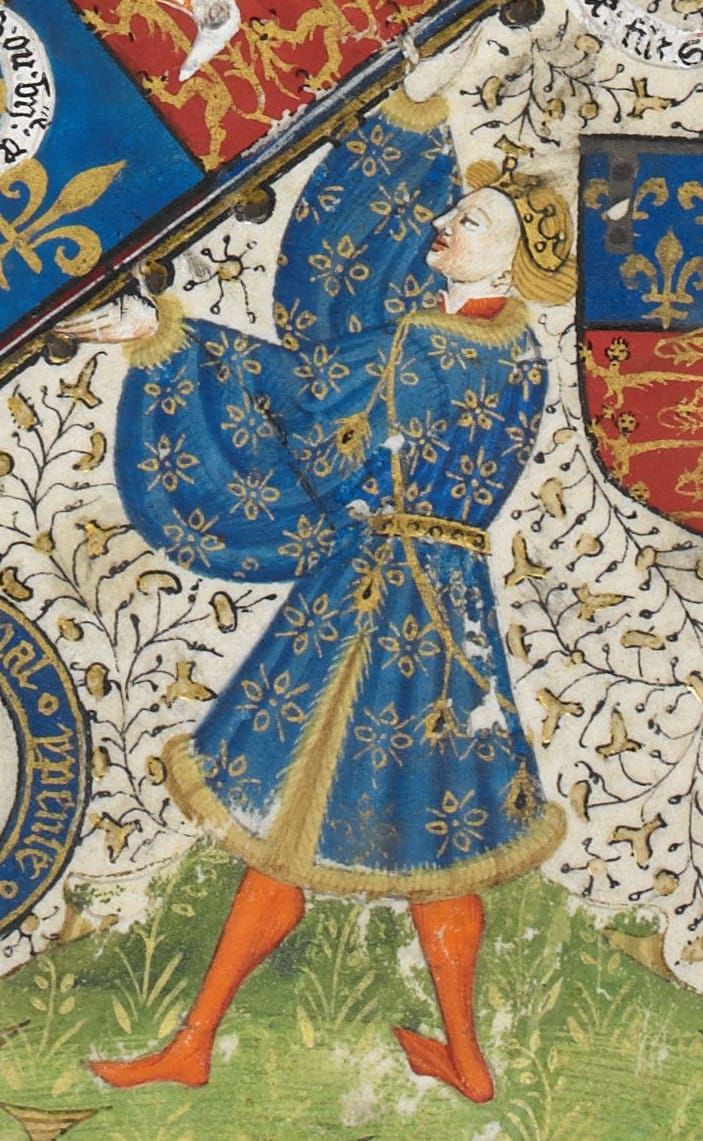
The father of kings who died fighting for a crown that was rightfully his, sparking the Wars of the Roses
He had a better claim to the English throne than the man who wore the crown. He was wealthier, more capable, and more popular than King Henry VI. Yet Richard, Duke of York spent his life watching an incompetent king misrule England, constrained by loyalty and political calculation from seizing what was arguably his by right. When he finally claimed the throne, he was killed within weeks, his head displayed on the gates of York city with a paper crown in mockery. But his death was not the end—it was the beginning. His sons would take the throne he had died pursuing, and the House of York he founded would rule England for a quarter century. Richard of York's story is one of rightful claims denied, loyalty tested to breaking point, and a gamble for the throne that failed personally but succeeded dynastically.
The Yorkist Claim
Richard was born in 1411, and his claim to the throne was formidable—arguably better than that of the reigning House of Lancaster. Through his father, Richard of Conisburgh, he descended from Edmund of Langley, fifth son of Edward III. Through his mother, Anne Mortimer, he descended from Lionel of Antwerp, Edward III's second surviving son. Since Lionel was older than John of Gaunt (from whom the Lancastrians descended), Richard's claim through the female line was technically senior to the Lancastrian claim.
This mattered immensely. The Lancastrian dynasty, founded when Henry Bolingbroke deposed Richard II in 1399, always had a legitimacy problem. They ruled by conquest and parliament's acceptance, not by strict hereditary right. Richard of York's very existence was a challenge to Lancastrian legitimacy, even before he made any explicit claims.
Richard's early life was marked by tragedy. His father was executed for treason in 1415 for plotting against Henry V, and Richard inherited nothing from him. But his maternal uncle, Edmund Mortimer, Earl of March, died childless in 1425, and Richard inherited the Mortimer estates and the Mortimer claim to the throne. At fourteen, Richard became one of the greatest landowners in England and the man with the best hereditary claim to the crown.
Henry VI's government recognized the danger. They arranged Richard's marriage to Cecily Neville, daughter of the Earl of Westmorland—a powerful family loyal to the Lancastrians. The hope was that this marriage would bind Richard to the regime. Instead, Cecily (later called "Proud Cis" and "the Rose of Raby" for her beauty and pride) would become Richard's staunchest supporter and mother to two kings and a queen.
Service and Frustration
For the first decades of his adult life, Richard served the Lancastrian regime loyally. He was appointed Lieutenant of France in 1436, commanding English forces during the final stages of the Hundred Years' War. He served competently but was starved of resources by a government more interested in peace negotiations than supporting its commanders.
Richard's service in France was marked by frustration. He won some victories and held English territories together despite inadequate support, but the inexorable French advance continued. When he returned to England in 1445, he was owed enormous sums in back wages and expenses that the crown couldn't or wouldn't pay.
Richard was then sent to Ireland as Lieutenant in 1447, effectively exiling him from English politics. Ireland was seen as a backwater, and the appointment removed Richard from court where his presence and claim might threaten the regime. But Richard proved to be an effective governor of Ireland, building a power base and reputation that would serve him well in later conflicts.
The problem was that while Richard served loyally in France and Ireland, England's situation deteriorated. Henry VI proved to be one of England's worst kings—pious to the point of otherworldliness, prone to mental breakdowns, and utterly dominated by court factions. The loss of English territories in France, culminating in final defeat in 1453, humiliated England and discredited the government.
Richard watched capable men sidelined while incompetents and court favorites misruled England. He saw his rightful wages unpaid while favorites enriched themselves. Most frustratingly, he saw his superior claim to the throne ignored while an incapable king brought England to ruin. Richard's loyalty had limits, and by the 1450s, those limits were being reached.
The Protectorate
In August 1453, Henry VI suffered a complete mental breakdown, becoming catatonic and unresponsive. For over a year, he recognized no one, spoke to no one, and was incapable of any government function. England needed someone to rule in the king's name.
The obvious candidate was Richard. He was the greatest nobleman in the realm, the king's closest adult male relative (through very complicated lineages), and a man of proven administrative ability. In March 1454, Richard was appointed Protector and Defender of the Realm—essentially regent, though that term was carefully avoided.
Richard's protectorate showed what he was capable of. He governed effectively, restoring order, settling disputes, and beginning to reform the corrupt administration that had developed under Henry VI. He also moved against his political enemies, particularly Edmund Beaufort, Duke of Somerset, whom Richard blamed for the disasters in France and for corruption at home.
But Richard's protectorate was always temporary. When Henry VI recovered from his madness in December 1454, Richard was removed from power. The king, influenced by his strong-willed queen Margaret of Anjou and by Somerset, restored the old regime and stripped Richard of his authority.
Richard had tasted power and shown his capability. He had also made enemies, particularly Margaret of Anjou, who saw him as a threat to her son's inheritance. The stage was set for conflict.
The First Battle
In May 1455, at St. Albans, Richard and his allies (particularly the powerful Neville family) clashed with royal forces led by Somerset. It was a small battle—really more of a skirmish—but it was decisive. Somerset was killed, Henry VI was captured (slightly wounded), and Richard was back in control.
This First Battle of St. Albans began the Wars of the Roses, though contemporaries didn't call it that—the name came later. It was initially seen as just another episode in the factional struggles that had plagued Henry VI's reign. But it marked the point where opposition to the king's government became armed conflict.
For the next several years, Richard and his allies attempted to govern through control of Henry VI, while Margaret of Anjou built opposition. Richard was again appointed Protector during another of Henry's mental episodes, but each time Henry recovered, Richard lost power. It was a frustrating pattern that convinced Richard that working within the system would never succeed.
The Fatal Claim
By 1460, Richard decided he had to claim the throne openly. After a military victory at Northampton where the Yorkists captured Henry VI, Richard returned from Ireland and marched into Parliament. He strode to the throne and placed his hand upon it, claiming it as his right.
Richard expected acclaim. Instead, there was shocked silence. Even his own allies—men who had fought beside him—were unprepared for such a bold claim. Deposing an anointed king was a step too far for most nobles, even those who opposed Henry VI's government.
The result was a compromise called the Act of Accord (October 1460). Henry VI would remain king for his lifetime, but Richard was recognized as his heir, disinheriting Henry's son Edward of Westminster. It seemed like a solution—Richard would eventually get the throne, Henry could finish his reign, and civil war might be avoided.
But the compromise satisfied no one. Margaret of Anjou was furious that her son had been disinherited. She raised an army in the north, determined to destroy Richard and restore her son's inheritance. Richard, for his part, found that his claim had alienated some supporters without gaining him the crown.
The Battle of Wakefield
In December 1460, Richard marched north to confront Margaret's army. It was a fatal miscalculation. Richard's forces were outnumbered, and he was lured out of Sandal Castle (near Wakefield) into a trap. In the battle that followed, Richard was killed along with his second son Edmund, Earl of Rutland, and his ally Richard Neville, Earl of Salisbury.
The victorious Lancastrians treated Richard's body with contempt. His head was cut off and displayed on the gates of York city—the city whose name he bore—with a paper crown placed mockingly on it. It was meant to humiliate the man who had claimed the throne, to show the fate of traitors and usurpers.
Richard died having apparently failed completely. He had claimed the throne and been killed within weeks. His army was destroyed, his allies dead or scattered, and the Lancastrian regime seemed secure. At forty-nine, Richard's gamble for the crown had ended in disaster and disgrace.
The Sons' Revenge
But Richard's death was the beginning, not the end. His eldest son Edward was just eighteen but had inherited his father's claim and his military talent. Within three months of Richard's death, Edward had defeated the Lancastrians at the Battle of Towton, the bloodiest battle ever fought on English soil. He entered London in triumph and was crowned King Edward IV.
Richard's gamble had failed for him personally but succeeded for his dynasty. The House of York ruled England from 1461 to 1485 (with one brief Lancastrian restoration in 1470-71). Richard's sons Edward IV and Richard III both wore the crown he had died pursuing. Richard's daughter Margaret became Duchess of Burgundy and a powerful force in European politics. His bloodline produced not only kings but also, through his daughter Elizabeth (who married into the Tudor family), the dynasty that reunited England after the Wars of the Roses.
The Yorkist Legacy
Richard of York never wore the crown, but he founded the dynasty that did. His importance to English history is immense precisely because of his failure—his death radicalized his son Edward and his allies, making compromise impossible and total victory necessary.
Richard also represented a crucial constitutional principle: hereditary right mattered. The Lancastrian dynasty had ruled through conquest and parliamentary acceptance, but they never resolved the question of whether they had the best hereditary claim. Richard forced that question into the open, and even though he died for it, his claim resonated. When his son Edward took the throne, he justified it partly through his father's superior bloodline.
Richard was also, by most accounts, a capable man denied his due. He governed effectively when given the chance, he commanded armies competently, and he administered territories successfully. He showed more political skill and military ability than Henry VI, yet Henry wore the crown while Richard served and was ultimately killed trying to claim what he believed was rightfully his.
Richard's relationship with his wife Cecily was apparently strong—rare in an age of political marriages. She was called "Proud Cis" and was apparently as convinced of Richard's rights as he was. She raised their children (they had twelve, of whom seven survived to adulthood) with a strong sense of their Yorkist identity and royal blood. After Richard's death, Cecily became a powerful dowager duchess and lived to see two of her sons crowned and a third rule as Lord Protector.
Richard's decision to claim the throne openly in 1460 remains controversial. Had he been more patient, had he waited for Henry VI to die naturally, he might have succeeded peacefully to the throne under the Act of Accord. But Margaret of Anjou would never have accepted that outcome—she would have fought regardless. And Richard, having served loyally for decades and been repeatedly denied and humiliated, had reached the end of his patience.
Richard of York's story is ultimately tragic. He had a superior claim, he had ability and resources, and he had every reason to believe the throne should be his. But he was born at the wrong time, into a dynasty that had usurped the throne and would not give it up easily. His decision to claim his rights openly led to his death, but it also began the chain of events that brought his sons to the throne.
In the end, Richard matters because he transformed a political rivalry into a dynastic war. Before him, the conflicts of Henry VI's reign were about control of the king's government. After Richard's claim in 1460 and his death at Wakefield, they became about which family had the right to rule England. The Wars of the Roses as we know them—York versus Lancaster, the struggle for the crown itself—began with Richard's claim and his death.
The man with the paper crown mocking him on York city gates had the last laugh. His sons wore real crowns, and his bloodline shaped English history for generations. Richard of York died a traitor by Lancastrian law, but history remembers him as the founder of a royal house—the last great Plantagenet prince, and the father of kings.