King Charles III to Make First State Visit to United States in April To Celebrate America250 - Look at Historical Royal Visits

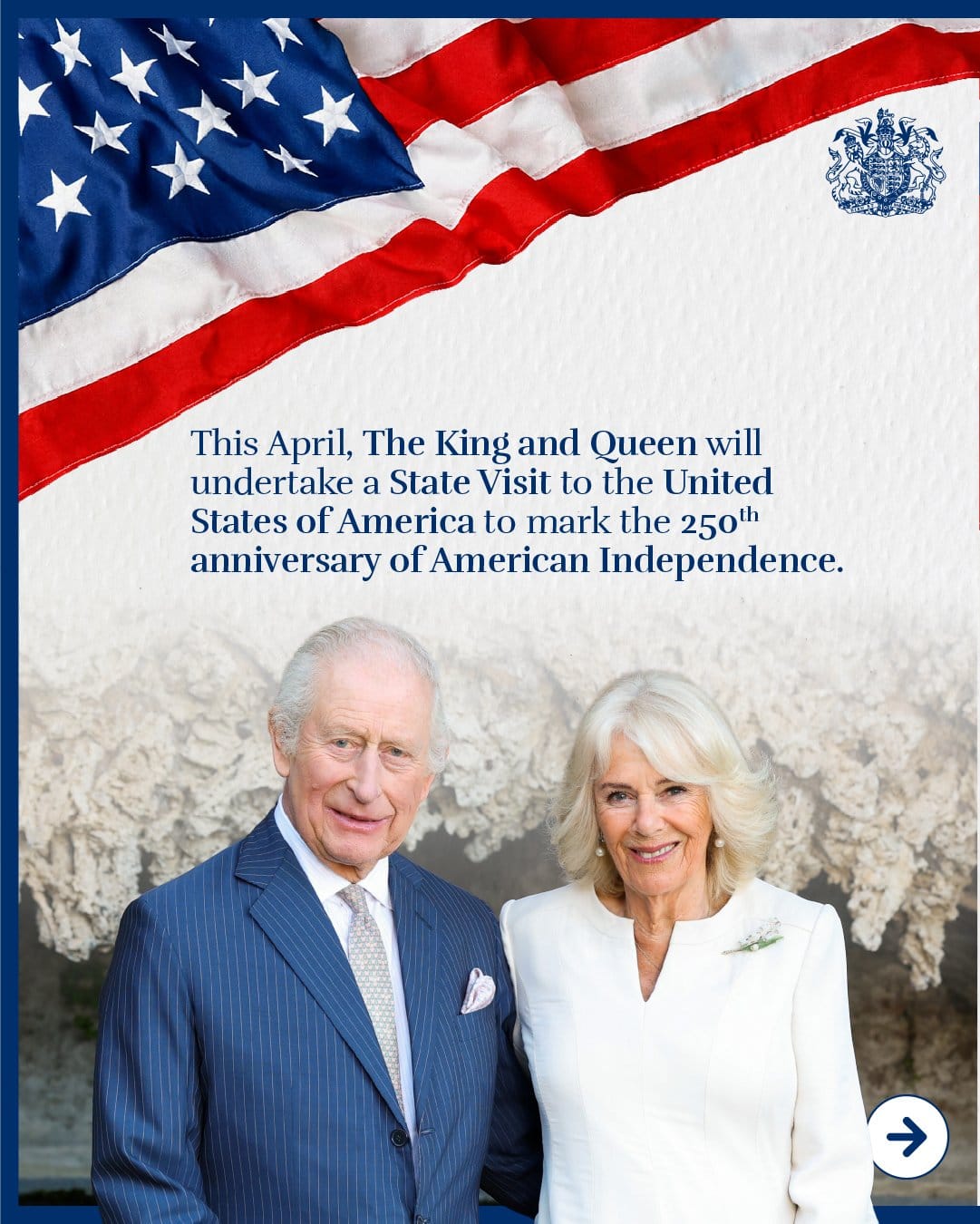
King Charles III and Queen Camilla will travel to the United States in late April for the first British state visit to America since Queen Elizabeth II's trip in 2007, Buckingham Palace has confirmed.
The visit, which will take place from 27–30 April, will include Washington DC and a state banquet at the White House on the evening of 28 April. The King is also expected to deliver an address to Congress. On the return journey, Their Majesties will pay a visit to Bermuda, a British Overseas Territory in the North Atlantic.
President Donald Trump announced the visit on social media, saying that he and First Lady Melania Trump "look forward to spending time with the King, whom I greatly respect. It will be TERRIFIC!"
The trip comes as the United States marks its 250th anniversary of independence this year, and Buckingham Palace said the visit will "celebrate the historic connections and the modern bilateral relationship" between the two countries.
The announcement follows President Trump's state visit to Windsor Castle last September, which appeared to have smoothed UK-US relations after a period of tension. Trump spoke warmly of his time with the King, saying "He honored me and our country... we had an amazing time" and describing the monarch as "fantastic."
However, the confirmation of the trip comes amid political differences between the two governments, including over the war in Iran, in which Trump publicly criticized UK Prime Minister Sir Keir Starmer. The decision to hold a state visit is made by the government, with the monarch traveling on behalf of the Foreign Office.
A History of Royal State Visits to America
Royal visits to the United States have a long and significant history, often reflecting the broader relationship between Britain and its former colony.
The first reigning British monarch to visit the United States was King George VI, who traveled with Queen Elizabeth (later the Queen Mother) in 1939. That visit, which included a stop at the World's Fair in New York and a famous meeting with President Franklin D. Roosevelt at Hyde Park, was designed to strengthen Anglo-American ties on the eve of the Second World War. The visit was a remarkable success, with the King and Queen receiving an enthusiastic reception that helped cement the wartime alliance that would follow.
Queen Elizabeth II made her first state visit to the United States in 1957, during the presidency of Dwight D. Eisenhower. She would return multiple times over her 70-year reign, visiting America more than any other country outside the Commonwealth. Her visits spanned the administrations of numerous presidents, from Eisenhower to Obama.
In 1976, the Queen visited during America's bicentennial celebrations—the 200th anniversary of independence from Britain. The trip included a state dinner hosted by President Gerald Ford and demonstrated the transformation of the relationship between the two nations from colonial ruler and subject to close allies.
Her 1991 visit, during the presidency of George H.W. Bush, saw her address a joint session of Congress—a rare honor that King Charles is expected to repeat during his April visit. In 2007, she made her final state visit to America, meeting President George W. Bush and attending the Kentucky Derby.
King Charles himself is no stranger to the United States. As Prince of Wales, he visited America numerous times, often to promote causes close to his heart such as environmental conservation and sustainable architecture. However, this will be his first visit as sovereign.
The April trip will be closely watched on both sides of the Atlantic, not only for its diplomatic significance but also for any potential meeting between the King and his son Prince Harry, who now lives in California with his wife Meghan and their two children (their likely won't be any kind of meeting).