King Charles Shares Positive Cancer Update in Special Message - Treatment to Be Reduced in the New Year

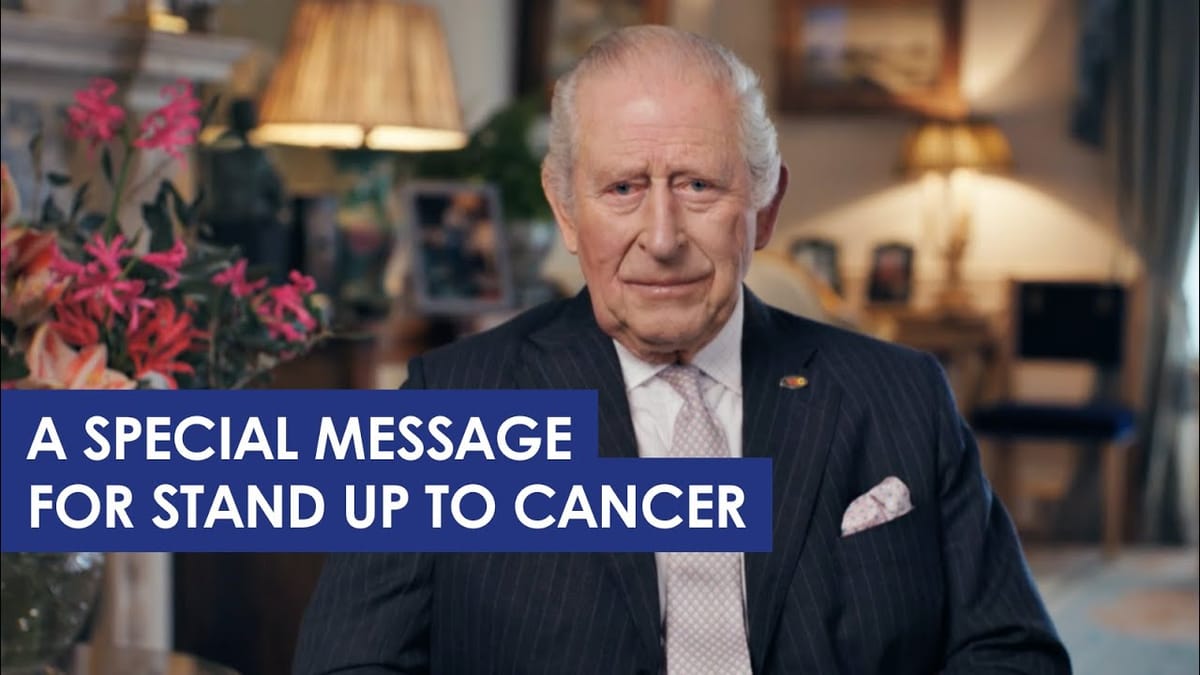
King Charles has delivered a rare televised message tonight sharing encouraging news about his cancer treatment—his doctors have advised that his treatment schedule can be reduced in the New Year.
The King's message, broadcast during Channel 4's Stand Up To Cancer fundraising night, marks the most significant public update on his health since Buckingham Palace announced his cancer diagnosis in February.
A Positive Milestone
According to Buckingham Palace, "His Majesty has responded exceptionally well to treatment and his doctors advise that ongoing measures will now move into a precautionary phase. This position will be continuously monitored and reviewed to protect and prioritise his continued recovery."
The King described the news as "a great personal blessing" and "a testimony to the remarkable advances that have been made in cancer care in recent years."
However, the Palace was clear that this does not mean the King is in remission or cured—he will continue to receive treatment, though at a significantly reduced frequency. The specific form of cancer the King is being treated for remains private, though the Palace previously confirmed it is not prostate cancer.
Urging the Public to Get Screened
The King used his message to highlight a concerning statistic: at least nine million people in the United Kingdom are not up to date with available cancer screenings—representing nine million missed opportunities for early diagnosis.
"The statistics speak with stark clarity," the King said. "To take just one example: When bowel cancer is caught at the earliest stage, around nine in ten people survive for at least five years. When diagnosed late, that falls to just one in ten."
His Majesty encouraged viewers to use the new national Screening Checker at screeningchecker.co.uk, a tool developed by Cancer Research UK and Channel 4 that helps people determine their eligibility for breast, bowel, and cervical cancer screening programmes.
Continuing a Full and Active Life
The Palace noted that the King's ability to maintain his duties has been an important part of his recovery. "The King has taken great comfort and encouragement from being able to continue leading a full and active life throughout his treatment, while always heeding the advice of his medical team. His ability to uphold all of his State duties, and to continue with public engagements and overseas tours, has helped greatly with the positive mindset that, as many families will know, is such a vital part of the recovery journey."
The pre-recorded message was filmed on 27 November in the Morning Room at Clarence House, with the King wearing a Stand Up To Cancer lapel pin. It aired shortly before a live broadcast from Addenbrooke's Hospital in Cambridge, presented by Davina McCall.
Support from Cancer Research UK
Michelle Mitchell, Chief Executive of Cancer Research UK, for which the King serves as Royal Patron, said: "We're incredibly grateful to our patron, His Majesty The King, for supporting this year's Stand Up To Cancer. We know that when public figures speak openly about their cancer diagnosis, it can prompt others to check in on their health and speak to a GP if something is worrying them. We wish His Majesty well with his continued recovery."
She added: "Spotting cancer early can make a real difference and provides the best chance for successful treatment. With over nine million people in the UK not up to date with their cancer screening, our new Screening Checker guides users through their eligibility for breast, bowel, or cervical screening. Taking just a few minutes to check could be an important step towards taking charge of your health."
Stand Up To Cancer UK, a joint initiative between Cancer Research UK and Channel 4, has raised over £113 million since its launch in 2012, funding 73 clinical trials and projects involving more than 13,000 cancer patients nationwide.
The King's Message in Full
This is a season when our thoughts turn to celebrations with our friends and families. In the midst of this festive period, I just wanted to ask you to join me today in finding a special place in your hearts, and your minds and prayers for the hundreds of thousands of people across our United Kingdom who receive a cancer diagnosis each year – and for the millions more who love and care for them.
I know from my own experience that a cancer diagnosis can feel overwhelming. Yet I also know that early detection is the key that can transform treatment journeys, giving invaluable time to medical teams – and, to their patients, the precious gift of hope.
These are gifts we can all help deliver.
Throughout my own cancer journey, I have been profoundly moved by what I can only call the "community of care" that surrounds every cancer patient - the specialists, the nurses, researchers and volunteers who work tirelessly to save and improve lives.
But I have also learned something that troubles me deeply – at least nine million people in our country are not up to date with the cancer screenings available to them. That is at least nine million opportunities for early diagnosis being missed.
The statistics speak with stark clarity. To take just one example: When bowel cancer is caught at the earliest stage, around nine in ten people survive for at least five years. When diagnosed late, that falls to just one in ten.
Early diagnosis quite simply saves lives.
Now, I have heard this message repeatedly during my visits to cancer centres across the country. I know, too, what a difference it has made in my own case, enabling me to continue leading a full and active life, even while undergoing treatment.
Indeed, today I am able to share with you the good news that thanks to early diagnosis, effective intervention and adherence to 'doctors' orders', my own schedule of cancer treatment can be reduced in the New Year. This milestone is both a personal blessing and a testimony to the remarkable advances that have been made in cancer care in recent years; testimony that I hope may give encouragement to the fifty per cent of us who will be diagnosed with the illness at some point in our lives.
Yet too often, I am told, people avoid screening because they imagine it may be frightening, embarrassing or uncomfortable. If and when they do finally take up their invitation, they are glad they took part. A few moments of minor inconvenience are a small price to pay for the reassurance that comes for most people when they are either told they don't need further tests, or, for some, are given the chance to enable early detection, with the life-saving intervention that can follow.
This is why I am so encouraged to learn about the new national Screening Checker that is available online. This simple tool allows you to check whether you are eligible for breast, bowel or cervical cancer screening. It demystifies the process, answers your questions, and guides you towards taking that crucial step.
As I have observed before, the darkest moments of illness can be illuminated by the greatest compassion. But compassion must be paired with action. This December, as we gather to reflect on the year past, I pray that we can each pledge, as part of our resolutions for the year ahead, to play our part in helping to catch cancer early.
Your life - or the life of someone you love - may depend upon it.
Therefore, this brings my most heartfelt thanks to the doctors, nurses, researchers and charity workers involved in diagnosis and treatment programmes, together with my particular good wishes to those for whom they care so selflessly.
For readers in the United Kingdom, the new Screening Checker is available at screeningchecker.co.uk. The tool helps you determine your eligibility for NHS breast, bowel, and cervical cancer screening programmes.