Royal Biographer Robert Hardman on Charles III: "He's as Happy as I've Ever Seen Him"

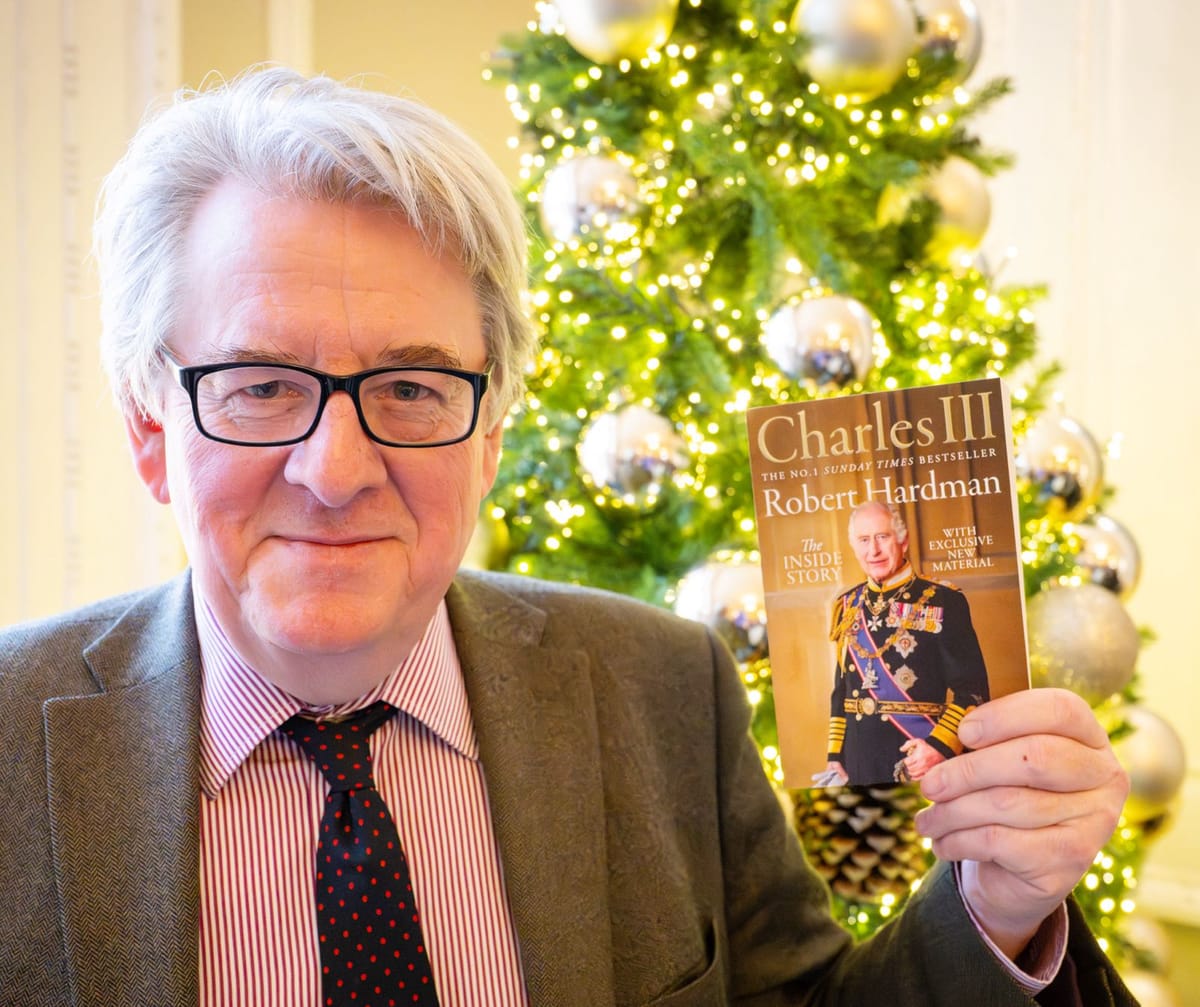
In a wide-ranging press conference with the Foreign Press Association in London, the acclaimed royal author shared insights on the King's health, the Harry rift, and the future of the monarchy
Royal biographer Robert Hardman has spent over three decades covering the British monarchy, from the tumultuous "annus horribilis" of 1992 through to the present reign. This week, he sat down with the Foreign Press Association in London to discuss his biography of King Charles III, and what emerged was a portrait of a monarch who, despite cancer treatment, has found a new serenity in the role he waited a lifetime to assume.
Royaltopia is a member of the FPA London and while we were not there in person, a recording of the event was provided to us.
The Moment He Became King
Perhaps the most striking revelation from Hardman's account is the extraordinary circumstances of Charles's accession. On September 8, 2022, as Queen Elizabeth II declined rapidly at Balmoral, the then-Prince of Wales was at his home on the estate—picking mushrooms.
The day before, Elizabeth had performed what would be her final constitutional duty, appointing Liz Truss as Prime Minister. Hardman described it as a Herculean effort for the 96-year-old monarch, who was determined to do it properly. By that evening, she had even won a horse race at Goodwood. Those around her said she was "buzzing."
But the exertion took its toll. The following day, she didn't emerge for her morning call. Princess Anne, staying at the castle, telephoned her brother: "I think you need to get up here tomorrow."
Charles flew up, cancelled his engagements, and spent time at his mother's bedside. But still, no one expected hours rather than days. He returned to Birkhall, his home on the estate, and went out to the grounds.
What happened next reads like something from a novel. Charles was in a borrowed Land Rover on a back road along the River Dee when a staff member's phone began vibrating. The call was handed to his private secretary, who turned to the future King and said, "Sir, you're going to need to stop the car."
The phone was passed to Charles. On the other end was the late Queen's private secretary, who addressed him as "Your Majesty" for the first time. He was informed that he had become King—right there, in a borrowed vehicle, on a tiny road in the middle of Aberdeenshire.
A Smiley King
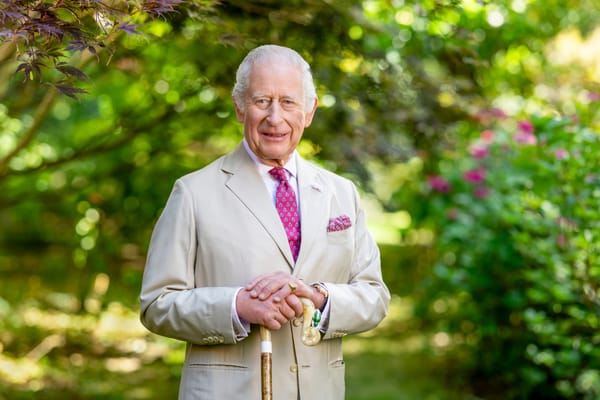
What has surprised Hardman most about the new reign is Charles's demeanour. The man who spent decades as a sometimes frustrated Prince of Wales—passionate, occasionally controversial, deeply engaged with causes—has transformed into something unexpected: a happy monarch.
"I think he's a much more contented soul," Hardman said. "Despite even post his medical diagnosis, even though he's got cancer, he's as happy as I've ever seen him in the 30-odd years I've been writing about this story."
One of Charles's close friends described it to Hardman as "a new serenity." Another offered an illuminating analogy: becoming King was like a barrister becoming a judge. Same person, different job—and you do it differently.
"It wasn't what I was expecting on that day in September 2022," Hardman admitted. "A smiley king."
The Health Question
On the matter of the King's cancer diagnosis—approaching its two-year anniversary in January—Hardman was characteristically measured. Charles has gone further than any previous royal in discussing his medical condition, though he hasn't specified the type of cancer.
The trajectory, however, has been consistently positive. In the early months after diagnosis, Charles couldn't enter crowded rooms. By Easter last year, he was allowed to shake hands again. By summer, light duties. By autumn, he was flying to a Commonwealth summit in the Pacific.
"All that's happened since the diagnosis is that I would say that he's got steadily stronger, not the other way around," Hardman observed. "He's living with it. That's the way it is."
He noted that Charles is already planning his 80th birthday celebrations—hardly the behaviour of someone in decline.
The Harry Question
The subject of Prince Harry inevitably arose, and Hardman offered his most detailed assessment of whether a reconciliation is possible.
In short: not anytime soon, and perhaps not ever for a full return to royal duties.
The damage, Hardman explained, comes from Harry's memoir Spare. Ironically, it wasn't so much what was said—most family members actually come out of the book fairly well. It was the act of saying it at all.
Prince William, Hardman noted, is an intensely private man who guards his family's privacy closely. To have his entire childhood laid bare in print was "incredibly hurtful." That relationship, Hardman suggested, will take longer to mend than Harry's bond with his father.
There's also a practical legal obstacle. As long as Harry continues to take legal action against the government—particularly regarding his security arrangements—meaningful reconciliation with the King is complicated. Charles is the "fountain of justice," and any private conversation risks being repeated publicly or used in legal proceedings.
"My dad said, actually, the government's wrong about my security," Hardman said, illustrating the constitutional nightmare such a scenario would create.
The path forward, if there is one, will be incremental: perhaps a private summer visit with the children, a trip to Balmoral. Baby steps. But a return to full royal duties? Hardman doesn't see it happening. "You can't come back into public life unless the public want you," he said plainly.
The Future: William's Vision
Prince William has spoken publicly about wanting "change" in the monarchy, a word he used repeatedly in a recent interview. Hardman counted five or six mentions—notable because, as he put it, "monarchy doesn't do change."
But William's vision isn't about constitutional upheaval. It's tonal. After watching his father's coronation, the Prince of Wales reportedly felt parts of it were "too arcane" and certainly too long. Expect a shorter ceremony when his time comes.
There may also be changes to how the family uses its residences. William and Catherine have made Fort Lodge in Windsor their main home, and there's no guarantee the next generation will feel obligated to live at Buckingham Palace—especially given the late Queen's own reluctance to move there (it took a direct order from Winston Churchill).
The Monarchy's Soft Power
Throughout the conversation, Hardman returned to a central theme: the monarchy's unique value as a national asset. He cited Professor Joe Nye of Harvard, who identified soft power as a concept, and who told Hardman that Britain has two "inalienable top-class soft power assets": the English language and the monarchy.
The numbers support this. A US branding firm estimates the monarchy's value to the UK economy at approximately £2.5 billion. International surveys consistently show the royal family as the first thing most people worldwide associate with Britain.
"It is the prism through which this country is viewed by many people," Hardman said.
He recalled travelling with the late Queen's yacht Britannia when it stopped in New York without any royals aboard. The British Chamber of Commerce was offered use of the vessel for an event. The response? Wall Street titans who would never attend a business breakfast at a hotel came "like a shot" to an event on the Queen's yacht.
"It's that scarcity factor," Hardman explained. The monarchy can open doors that nothing else can.
Will It Last?
The existential question—will the monarchy survive?—drew a characteristically thoughtful response. Hardman pointed to the UN Development Index, which ranks countries by quality of life. Of the top ten nations, at least half are monarchies—a remarkable statistic given there are only 27 monarchies among roughly 190 countries.
"I'm not saying get a king and you'll live longer," he quipped, "but there's something in it."
He recalled the 1999 Australian referendum on becoming a republic, when 49½ of Australia's 50 daily newspapers backed the republican cause. The public voted 55-45 to keep the Queen. It wasn't a huge vote of confidence in the House of Windsor, Hardman noted—it was a vote of confidence in a system.
"When push comes to shove, people see: okay, politician, or someone who you just can't corrupt? And they go with that."
The monarchy has weathered worse storms than its current challenges. Hardman covered the royal family through the catastrophic 1990s—the collapsed marriages, Windsor Castle burning, Diana's death. Those were genuinely bleak times. The current situation, with its slimmed-down working royals and tabloid controversies, is manageable by comparison.
The real threat, Hardman suggested, isn't revolution. It's irrelevance—people simply waking up one day and wondering what the point is. That's why every generation must justify itself anew.
For now, at least, Charles III appears to be doing exactly that. Contentedly picking mushrooms one moment, greeting world leaders the next, navigating cancer treatment while planning his 80th birthday. A smiley king, against all expectations.
Robert Hardman's biography "Charles III: New King, New Court" is available now. His next book, an intimate portrait of Queen Elizabeth II, is scheduled for publication next year.