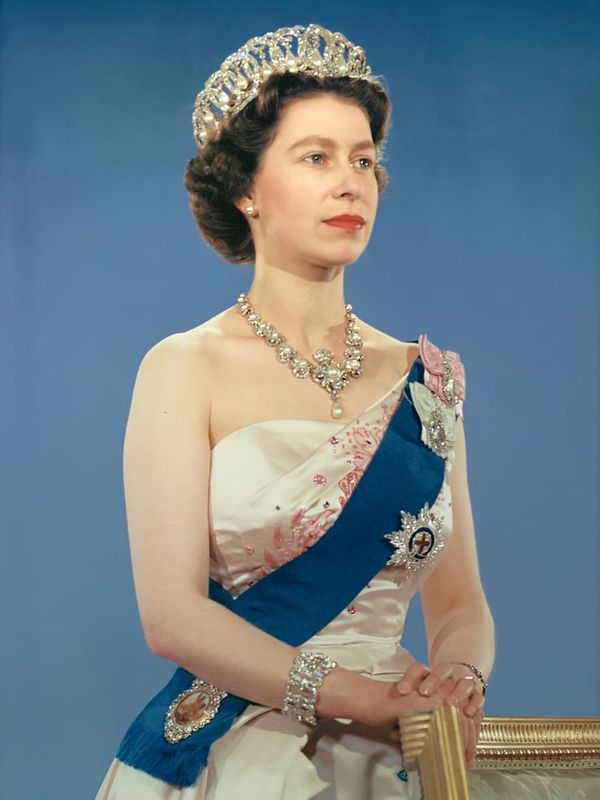
'She Remains Endlessly Fascinating': Robert Hardman on Writing the Definitive Biography of Elizabeth II

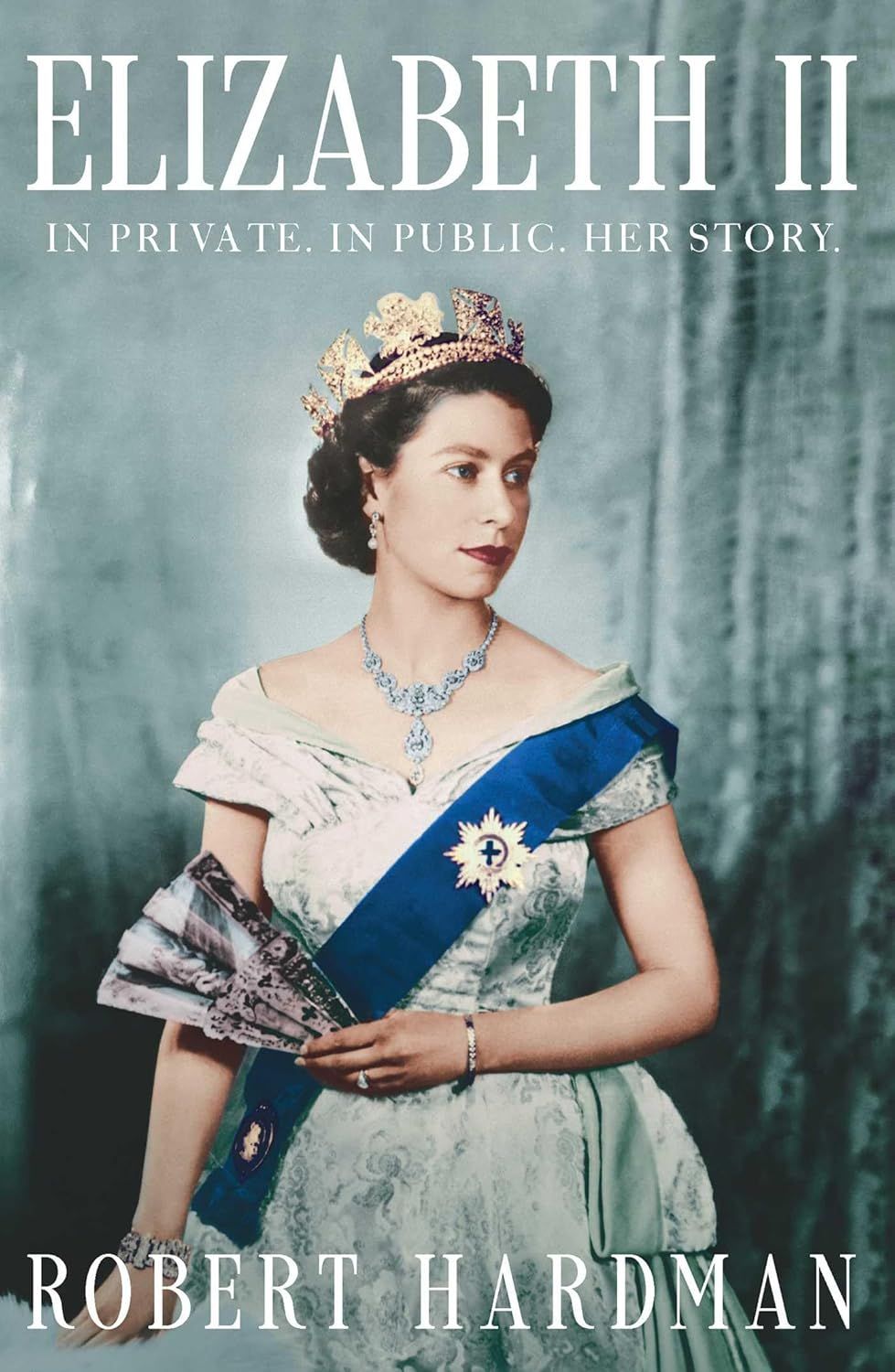
Royal biographer Robert Hardman sat down with the Foreign Press Association in London ahead of the centenary of Queen Elizabeth II's birth to discuss his new book, the lasting global legacy of Britain's longest-reigning monarch, and why — even now — she continues to defy easy definition.
There is a painting — the last portrait Queen Elizabeth II ever sat for — that tells you something important about her global reach. Completed in the spring of 2022, just months before her death, it was painted by British-Polish artist Basia Hamilton. It was intended for the Polish Institute in London, but the Queen liked it so much she kept the original for Windsor Castle and arranged for a copy to go to the Institute instead. That a monarch would quietly redirect a work of art meant for a diplomatic institution because she simply found it beautiful feels entirely in character: personal, decisive, and utterly without fuss.
"It's indicative of the regard that other world leaders have for her," royal biographer Robert Hardman told journalists at a press conference hosted by the Foreign Press Association in London.
The Book Behind the Visit
Hardman, one of Britain's most authoritative royal commentators and the author of several books on the Queen, was speaking ahead of the publication of his new biography — timed to coincide with what would have been Elizabeth II's 100th birthday on April 21st (out in the USA May 19th). It is, he suggested, the most personal book he has written about her.
"All the books I've written about her in the past were written while she was alive," he explained. "This one is different. I'm trying to get to the essence of her character."
What makes that task both challenging and compelling, he said, is that Elizabeth II spent seven decades carefully — perhaps instinctively — resisting definition. "One of her great skills in life was not really to be defined in any other way than she was utterly authentic. She was herself."
New voices helped shape the book. With the Queen no longer living, people who had known her personally but had previously been reluctant to speak to journalists were more willing to share their memories. Hardman interviewed those who had been present at her final state visits — she hosted 112 state visits during her reign, receiving at least 18 presidents, kings, and queens — including three former American presidents.
"I found that people who aren't normally given to letting journalists through the door were quite happy to sit down and talk," he said, "because of their regard for her."
'She Was the Last World Leader to Wear a Uniform in the Second World War'
Hardman was emphatic about the scale of what Elizabeth II's reign actually represented. She came to the throne in 1952 as a 25-year-old mother of two, and by the time of her death 70 years later, the world she had helped to shape was almost unrecognizable from the one she had inherited.
"Half the nations on Earth today did not exist when she came to the throne," he told the assembled press. "There were two Germanys. Countries that now have different names, flags, constitutions, and borders all changed during her reign." She was, he said, the last world leader to have worn a military uniform in the Second World War — a link to a generation now almost entirely gone.
The task of presiding over that change was immense. She had to dismantle an empire and reconstitute it as the Commonwealth, doing so, as Hardman put it, "with grace and a handshake and a smile." She steered Britain into Europe, then out of it. She navigated multiple wars, constitutional crises, and social revolutions — and through all of it, she remained, stubbornly and essentially, herself.
A More Nuanced Picture
One of Hardman's recurring themes was the gap between the simplified narratives that tend to attach themselves to the Royal Family and the more complicated reality he found in his research. The Queen's great skill, he argued, was precisely that she resisted being reduced to a simple story — and that the more one digs into the details of her reign, the more layered the picture becomes.
"We just discover more," he said. "It becomes a more nuanced picture."
That complexity is part of what makes her so enduringly interesting to write about — and why new material keeps emerging, even years after her death. "She remains endlessly fascinating."
The Commonwealth and the Question of Republics
For the international press corps gathered at the FPA, the question of the Commonwealth — and of the future of the realms that still retain the Crown as head of state — was inevitable. An Australian journalist raised the 1999 republic referendum, and Hardman offered one of the more striking anecdotes of the afternoon.
He recalled being in Monaco in 1993 when Sydney was awarded the 2000 Olympic Games. Olympic Charter rules require the Games to be opened by the head of state — which meant the Queen would open the Sydney Games unless Australia voted to become a republic in the intervening years. Hardman remembered pursuing then-Prime Minister Paul Keating around the room, asking about this constitutional wrinkle. "At one point he just told me to f--- off," Hardman said with evident amusement.
When the referendum came in 1999, everyone expected Australia to choose a republic. The political establishment, all the major newspapers, and the conventional wisdom pointed one way. The result went the other.
"It was extraordinary," Hardman said. He later interviewed Julia Gillard, herself a republican, who told him the result had surprised her for a specific reason. The expectation had been that newer Australians — those without British heritage — would vote most strongly for a republic. Instead, it was the opposite.
"People who come from countries with civil wars, totalitarian regimes, instability — they were precisely the people for whom the word 'republic' was not a good word. They didn't see the Queen as Elizabeth Windsor. They just saw the crown as a force for stability."
The pattern has repeated elsewhere. A 2009–10 plebiscite in Saint Vincent and the Grenadines, called by republican Prime Minister Ralph Gonsalves, produced another 55-45 result in favour of keeping the monarchy. The only recent Commonwealth realm to remove the Crown was Barbados in 2021 — and Hardman was pointed about how it happened: "There was no public vote. The government of Mia Mottley had a huge majority. She didn't put it to the people. It was not by popular mandate."
On the future of the realms under King Charles and eventually Prince William, Hardman offered an interesting distinction. Charles, he said, has a profound and nostalgic attachment to the Commonwealth built on personal experience — he grew up surrounded by its founding figures, and still treasures small mementoes like a watch given to him as a boy by Emperor Haile Selassie. William's relationship with the institution is more modern, more transactional. "It's a generational thing," Hardman said. "He didn't grow up surrounded by founding fathers of the Commonwealth like Charles did."
Towards a Centenary
As the event drew to a close, Hardman returned to the book's essential purpose: to recover something of the woman who made the reign what it was — to find, beneath the ceremonial and the history, the person herself.
People still ask him what she was really like, he said — and they still do not entirely know, because she was so skilled at being present without being transparent, at performing a role so completely that the performance and the person became indistinguishable. That is, perhaps, what made her both so admirable and so mysterious.
"She was utterly authentic," he said. "She was herself."
That, in the end, may be the most remarkable thing about her — that across 70 years, countless crises, and the eyes of the entire world, she never seemed to be anything else.
Robert Hardman's new biography of Queen Elizabeth II is published ahead of what would have been her 100th birthday on April 21, 2025 (out in the USA on May 19th). The press conference was held at the Foreign Press Association in London.