The State Opening of Parliament Set for May 13th, 2026: What It Is and What Happens

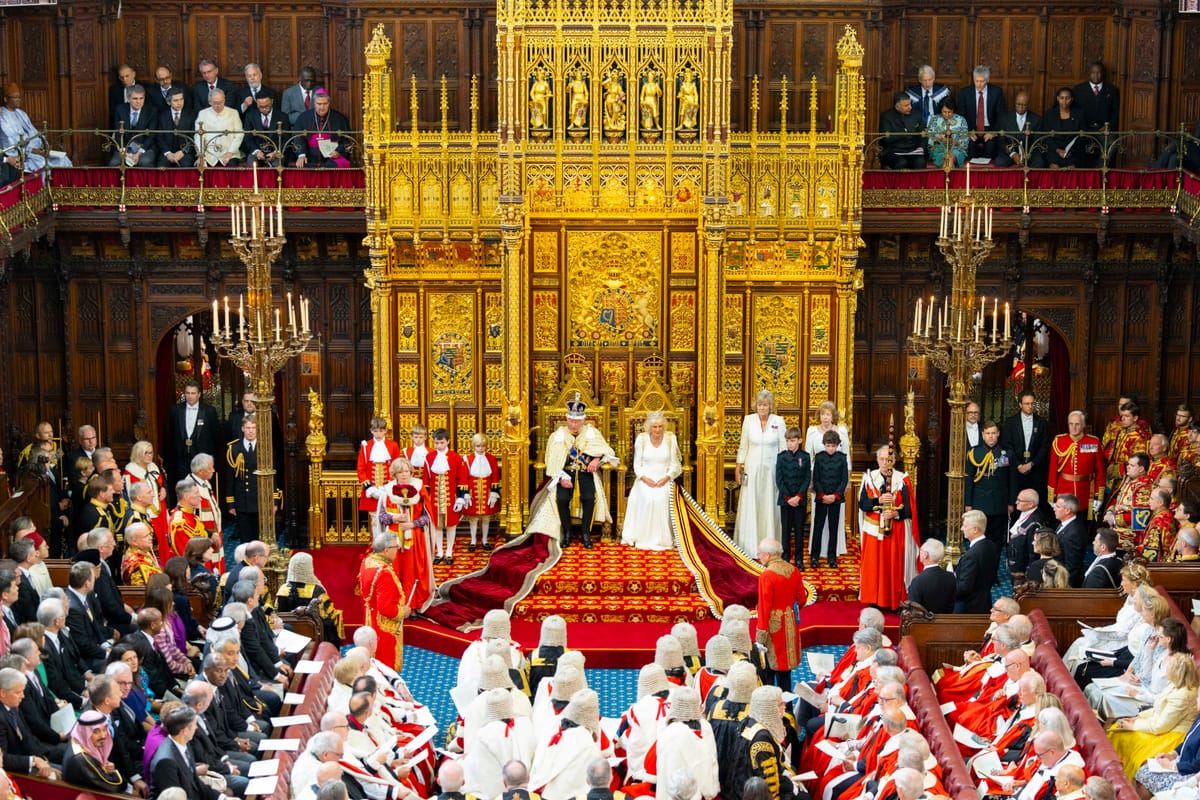
The next State Opening of Parliament takes place on Wednesday, May 13, 2026 — here's everything you need to know about one of Britain's most spectacular royal ceremonies.
If you've ever seen footage of King Charles III descending through London in a golden carriage surrounded by mounted cavalry, you've witnessed the State Opening of Parliament. It's one of those quintessentially British occasions that somehow manages to be ancient, theatrical, constitutionally serious, and utterly magnificent all at once. But what exactly is it — and why does it matter? Let us explain.
What Is the State Opening of Parliament?
The State Opening of Parliament is the ceremonial event that formally begins a new parliamentary session. It is the one occasion in the British calendar when all three components of Parliament — the Sovereign, the House of Lords, and the House of Commons — are assembled together in one place. More than a piece of pageantry, it is a constitutional necessity: without the monarch formally opening Parliament, the new session cannot begin.
At the heart of the ceremony is the King's Speech (or Queen's Speech, depending on the monarch), delivered from the Throne in the House of Lords. This speech — written entirely by the Prime Minister and Cabinet, not the King — sets out the government's legislative agenda for the coming parliamentary year: the bills it intends to introduce, the policies it plans to pursue, and the priorities it has for the session ahead.
The tradition dates back at least to the 16th century, and the ceremony as we know it today has remained remarkably stable for well over a hundred years.
When Does It Happen?
Historically, the State Opening tended to take place in November, at the start of the traditional parliamentary calendar. In more recent times, it has become tied to the political cycle — happening after a general election or when a new session of Parliament begins.
The most recent State Opening took place on July 17, 2024 — the first of the current Parliament, following Labour's landslide victory in that year's general election. The upcoming May 13, 2026 opening will mark the start of Parliament's second session, scheduled for the week after the 2026 local elections.
The Ceremony: A Step-by-Step Guide
The State Opening is a full day of ceremony, with events beginning early in the morning and drawing huge crowds along the processional route through central London.
The Regalia Is Transported First
Before the King even leaves Buckingham Palace, the Crown Jewels make their own journey. A solitary carriage — usually the Queen Alexandra's State Coach — with a special mounted escort from the Household Cavalry collects the Regalia from the Jewel House at the Tower of London, transporting it to Buckingham Palace and then on to Westminster. The Imperial State Crown travels separately to be ready for the King to wear when he delivers the speech.
The Royal Procession
The King departs Buckingham Palace in a horse-drawn carriage procession, escorted by the Household Cavalry in their distinctive full dress uniforms. The procession makes its way through St James's Park, down The Mall, and through Whitehall and Parliament Street to the Palace of Westminster — giving large crowds (and millions more on television) the chance to see the spectacle.
Arrival at Westminster
The King arrives at the Sovereign's Entrance to the Palace of Westminster at around 11:15am. As he proceeds up the Royal Staircase toward the Robing Room, he passes between two lines of dismounted Household Cavalry troopers in full dress uniform with drawn swords. In the Robing Room, he puts on the Parliament Robe of State — a magnificent crimson velvet robe — and the Imperial State Crown.
The Royal Procession Through the Palace
Once robed, the King leads a formal procession of heralds, Great Officers of State, and members of the Royal Household through the Royal Gallery — a grand room packed with around 600 guests — to the chamber of the House of Lords. A fanfare is sounded as he enters. He is greeted by the Lord Great Chamberlain, who oversees the royal areas of the Palace, and the Earl Marshal, who is responsible for state ceremonial.
The Summons of the Commons — and the Slamming of the Door
Once the King is seated on the Throne, the official known as Black Rod is dispatched to summon the Members of Parliament from the House of Commons. When Black Rod arrives at the doors of the Commons chamber, those doors are deliberately slammed in his (or her) face. Black Rod must knock three times before being admitted.
This is one of the most famous moments in the entire ceremony — and it is no mere theatre. The tradition symbolises the independence of the House of Commons from the Crown. Its roots stretch back to the Civil War and, in particular, to King Charles I's disastrous attempt in 1642 to enter the Commons and arrest five of its members. No reigning British monarch has set foot in the Commons chamber since. The door-slamming is a reminder, every single year, that the Commons does not simply answer to the monarch's command.
Once admitted, Black Rod delivers the royal command for the Commons to attend the House of Lords for the speech.
The Walk to the Lords
The MPs make their way from the Commons to the Lords — traditionally led by the Prime Minister and the Leader of the Opposition walking side by side, a rare moment of enforced bipartisan proximity. They stand at the Bar of the House (the boundary rail at the far end of the chamber, facing the Throne) for the duration of the speech. Only certain officials bow; the MPs themselves remain standing.
The King's Speech
With both Houses assembled, the King reads the speech from the Throne. He does so in a completely neutral and formal tone — there is no applause, no expression of approval or disapproval from either the Lords or the Commons while the speech is read. The King refers consistently to "My Government" throughout, making clear that the policies are his ministers', not his own.
The speech lists the main bills the government intends to introduce during the session, adds a catch-all line about "other measures" to preserve the government's flexibility, and typically mentions planned state visits. It concludes with a prayer for guidance: "My Lords and Members of the House of Commons, I pray that the blessing of Almighty God may rest upon your counsels."
The Procession Returns
Once the speech is complete, the Royal Procession re-forms and departs the chamber. The King returns to Buckingham Palace by carriage. Parliament — now formally opened — gets back to work.
What Happens After?
In the days following the State Opening, both Houses debate the contents of the speech. Traditionally, this debate lasts around five days in the Lords, with different subject areas examined each day. Members of both Houses then vote on an "Address in Reply to His Majesty's Gracious Speech" — effectively a vote of confidence in the government's legislative programme. After that, the bills mentioned in the speech begin their long journeys through Parliament.
What to Watch For on May 13, 2026
The 2026 State Opening will be only King Charles III's third — and his first since the July 2024 opening that followed the general election. It will open the second session of the current Parliament, and the King's Speech will set out whatever Labour's legislative priorities are for the year ahead.
If you're in London, the processional route offers excellent public viewing spots along The Mall, the corner of St James's Park facing Horse Guards, Whitehall, Parliament Street, and Parliament Green. Public transport is strongly recommended — the closest tube station is Westminster on the District, Circle, and Jubilee lines. Expect road closures and large crowds.
For those watching from home (or from across the Atlantic), the BBC provides comprehensive live coverage of the entire ceremony, typically beginning early in the morning.
The State Opening of Parliament is one of those occasions that reminds you why Britain's constitutional traditions are so endlessly fascinating — ancient ritual in the service of very modern democracy. We'll have full coverage here on Royaltopia on May 13th.