Memorial Statue to Show Queen Elizabeth II as Young Monarch, Inspired by Iconic Annigoni Portrait - Design Unveiled

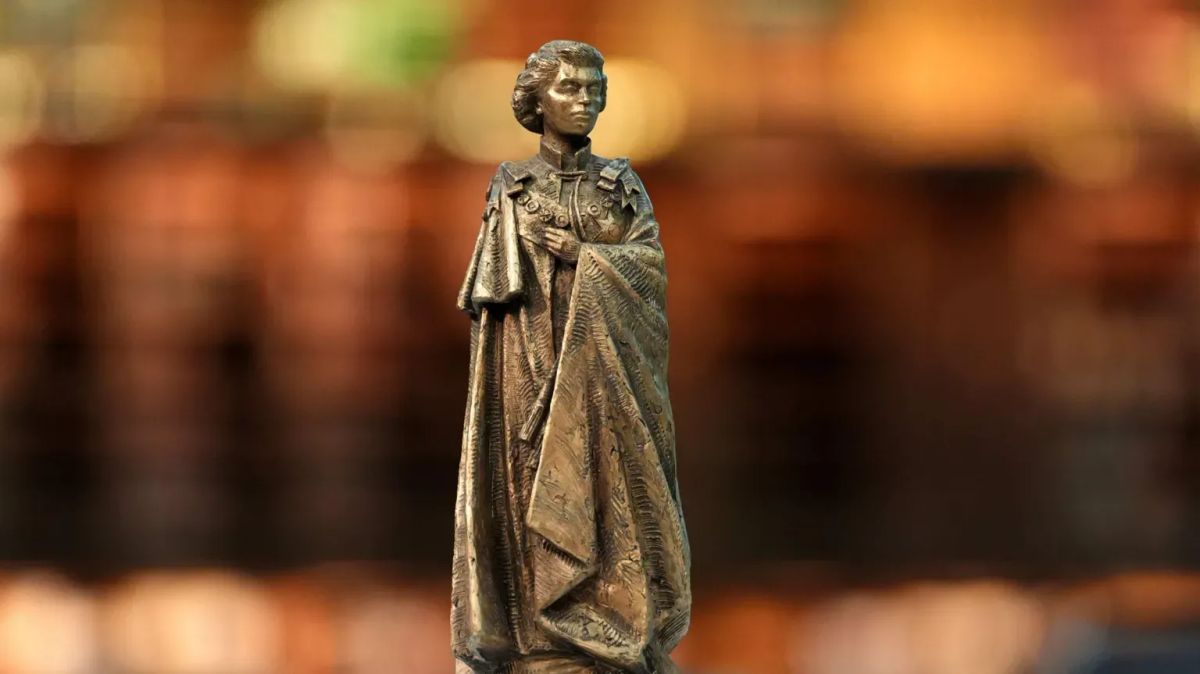
Plans for the national memorial to Queen Elizabeth II were revealed on what would have been her 100th birthday, with the centerpiece statue depicting the late monarch as a young woman at the beginning of her reign.
The bronze sculpture, to be created by acclaimed British sculptor Martin Jennings, will take inspiration from the celebrated 1955 portrait of Queen Elizabeth II by Italian artist Pietro Annigoni—widely regarded as one of the greatest royal portraits of the 20th century. The statue will show the Queen dressed in the robes of the Order of the Garter, standing at a new civic space called Queen Elizabeth II Place at Marlborough Gate, overlooking The Mall near Buckingham Palace.
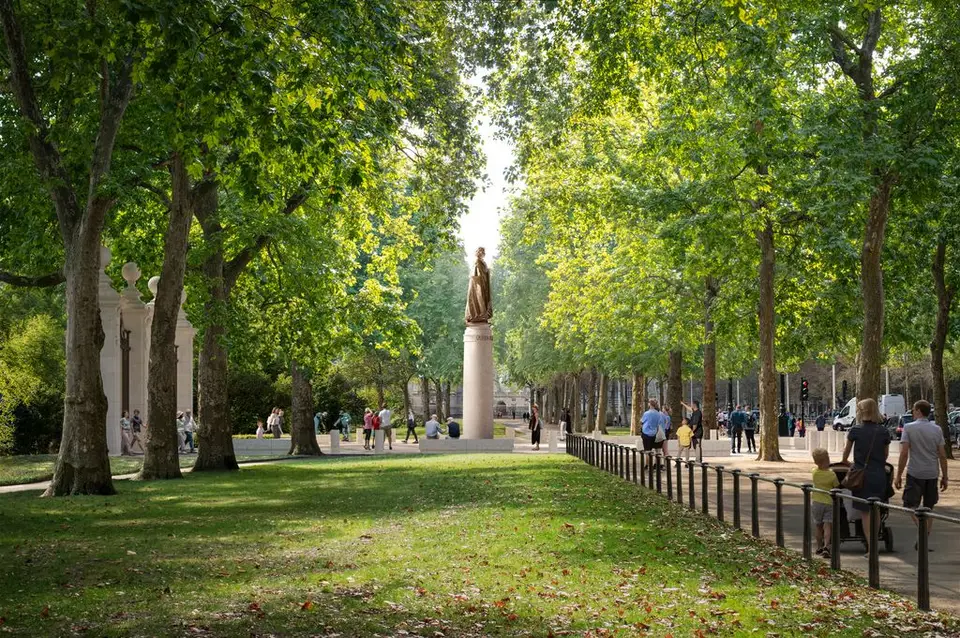
"We thought it was very important that the statue of the Queen, our head of state, was on the ceremonial route in her own right," said Lord Janvrin, chairman of the Queen Elizabeth Memorial Committee and former Private Secretary to the late Queen. "She will be depicted standing, on her own."
The statue will stand 7.3 meters (nearly 24 feet) high—with the Queen herself three meters (almost 10 feet) tall on a 4.3-meter (14-foot) plinth. Lord Janvrin described the Annigoni portrait as a "lovely, iconic image of the young Queen," adding: "We think probably most people would like to be remembered when they were young."
A companion statue of Prince Philip, Duke of Edinburgh, will be positioned 20 meters (about 65 feet) behind the Queen's figure within the park. The smaller companion statue—3.8 meters (12.5 feet) in height with a 2.3-meter (7.5-foot) figure and a 1.5-meter (5-foot) plinth—will show Philip at a similar age, wearing his Admiral-of-the-Fleet uniform.
"Prince Philip was such an important part—they worked as a team—of the realm that we've decided that he should be a few paces behind the Queen, a position he was accustomed to," Lord Janvrin explained.
At the Birdcage Walk entrance to St James's Park, a bust of the Queen in her later years—"not very old, but probably when she was in her fifties, sixties"—will be crafted by artist Karen Newman.
The Annigoni Portrait
The choice of the 1955 Annigoni portrait as inspiration carries deep significance. The painting was commissioned by the City of London livery company, the Worshipful Company of Fishmongers, and shows Elizabeth wearing the robes of the Order of the Garter, standing in a pastoral landscape.
Pietro Annigoni sat with the young Queen at Buckingham Palace in late 1954, when she was just 28 years old and had been on the throne for barely two years. The portrait was made soon after the Queen returned from the lengthy tour of the Commonwealth that occupied much of the year following her coronation, and it evokes the optimism which marked her reign before the change of national mood brought about by the Suez Crisis of 1956.
When the painting was first displayed at the Royal Academy's Summer Exhibition in 1955, it drew crowds said to be ten-deep with viewers fascinated by the portrait's idealized yet penetrating character. The exhibition attracted 286,000 visitors—more than any Summer Exhibition since the First World War.
In an interview with the Scottish Daily Mail in March 1955, Annigoni explained: "I have tried to depict her as the symbol of the new Elizabethan age, but I wanted to capture in her the spirit of youth."
While some critics dismissed the portrait as "romanticized and chocolate boxy," the public loved it—and the Queen, too, is known to have done so. The painting has subsequently been deemed by many to be the most successful of all Elizabeth II's portraits.
The Sculptor: Martin Jennings
Martin Jennings is one of Britain's most celebrated figurative sculptors, known for his ability to capture both likeness and character in bronze and stone. His statue of John Betjeman at St Pancras railway station was unveiled in 2007 and has become a celebrated London landmark, while his statue of Philip Larkin at Hull Paragon Interchange station was presented in 2010.
His statue of Mary Seacole, one of his largest works, stands in the grounds of St Thomas' Hospital in central London. In November 2017, his statue of George Orwell was unveiled outside Broadcasting House, headquarters of the BBC.
Most significantly for this commission, Jennings designed the effigy of King Charles III that appears on British coinage. On 30 September 2022, the Royal Mint unveiled Jennings' design for the obverse face of British coins, and a crowned version was used for special edition issues at the time of the coronation in May 2023. A digitally re-lit version of the same portrait has been used by Royal Mail for stamps bearing the King's image.
The connection between sculptor and subject is therefore already established—Jennings has depicted the son, and now will immortalize the mother.
The Wider Memorial
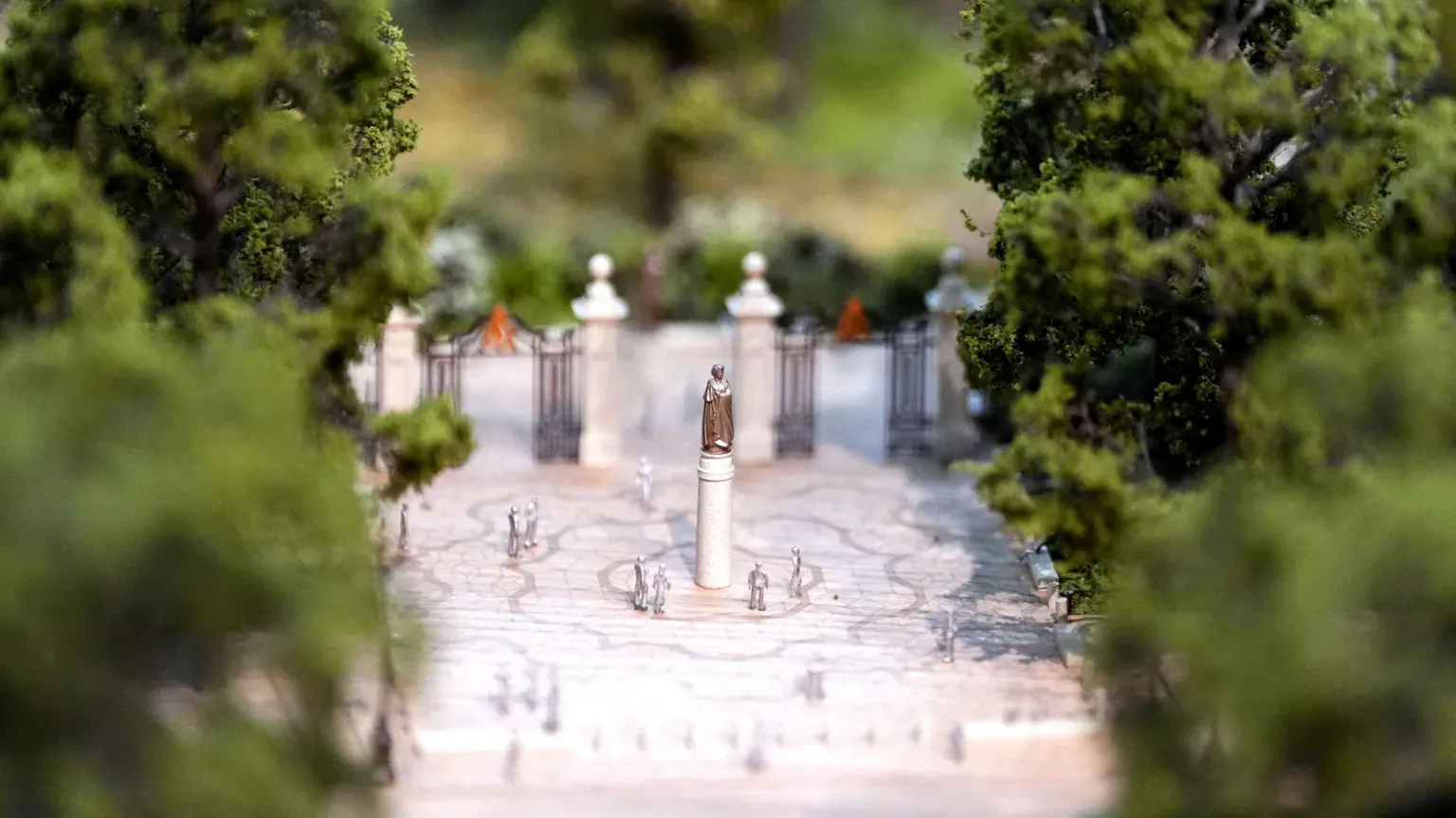
The statues form part of a broader memorial park designed by Foster + Partners in collaboration with French landscape architect Michel Desvigne and artist Yinka Shonibare. The scheme includes a new tiara-inspired bridge across the park's central lake, a memorial path through UK and Commonwealth Gardens, and a bronze wind sculpture by Shonibare decorated with flora from all 56 Commonwealth nations.
The King, Queen Camilla, and other members of the Royal Family viewed maquettes of the planned statues and a scale model of the wider memorial at the British Museum on Tuesday, as part of events commemorating what would have been the late Queen's 100th birthday.
The Queen Elizabeth Memorial Committee was established in 2023 to develop plans for the memorial. It has consulted experts in arts, history and heritage and other stakeholders from across the United Kingdom. His Majesty The King has been sighted throughout the process and the Committee's proposals were approved by the Prime Minister in April 2026.
The memorial is expected to be completed in 2028.