Behind Castle Walls: Prince William's Disarmingly Human Turn on 'The Reluctant Traveler'


A Future King on a Scooter, Grief Over Guinness, and the Calculated Candor of Modern Royal Media
In an era when the British monarchy finds itself perpetually navigating between tradition and transparency, Prince William's appearance on the fourth episode of Apple TV+'s "The Reluctant Traveler With Eugene Levy" represents a fascinating case study in controlled vulnerability. The episode, which premiered October 3, 2025, offers viewers something rarely seen: a future king discussing his "hardest year," childhood trauma, and hopes for institutional change—all while maintaining the carefully managed distance that defines modern royal media engagement.
The Unlikely Setup
Eugene Levy, the 78-year-old Canadian actor best known for "Schitt's Creek" and "American Pie," admits he had no idea Prince William would appear on his show until he received a handwritten invitation while filming in London. The premise of "The Reluctant Traveler" revolves around pushing Levy—a self-described homebody—out of his comfort zone through bucket-list travel experiences. An episode focused on British royalty seemed inevitable given Levy's Canadian Commonwealth connections, but a personal tour from the Prince of Wales himself elevated it into something more significant.
The invitation itself, as depicted in the episode, bore the hallmarks of royal formality softened by personal warmth: "Dear Eugene, (handwritten), I heard that your travels have brought you to the UK, and I wondered if you might like to see Windsor Castle... If you're free at 10:00 tomorrow, why don't you pop down to the castle for a private tour? Would be great to see you. With best wishes, William."
Levy's genuine surprise reads as authentic throughout the episode. "From the Prince of Wales, future king. Okay, now I'm getting hot. I'm actually kind of flush," he says upon reading the note. It's this quality—two people from vastly different worlds finding unexpected common ground—that makes the episode compelling.
Arrival on an Electric Scooter
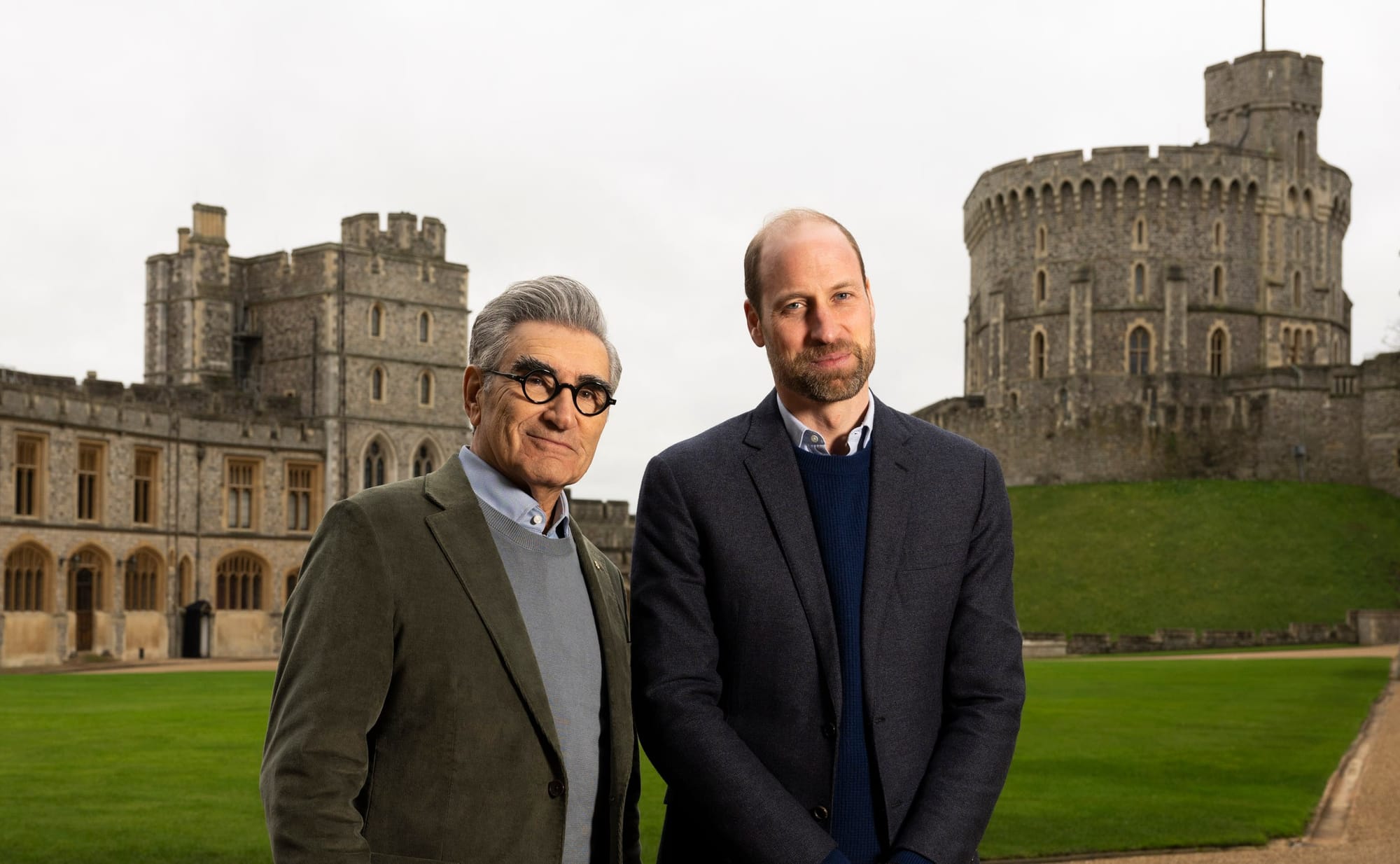
The first jarring image comes when Prince William arrives to greet Levy, not in a car, not on foot, but zooming up on an electric scooter. "When he pulled up on a scooter, it was a very surreal kind of moment for me," Levy later reflected. It's a small detail, but symbolically potent—a 43-year-old father using practical, environmentally conscious transportation to navigate his workplace, which happens to be a 1,000-year-old castle.
"This is your mode of transportation," Levy observes with characteristic deadpan humor. "It gets around quite nicely around here," William replies. "My father spends a lot of time here, but we don't actually live in the castle itself. But we come and use the castle for work and for meetings and I'm always late, so I thought this was the way to keep my meetings on time. I'm still regularly late anyway."
The self-deprecating admission of chronic lateness—delivered within the first moments of meeting—sets a tone that continues throughout. William even reveals that he got a puncture that morning, explaining why he was "going so slowly up the road." These are the kinds of mundane, relatable details that humanize someone whose life otherwise exists in a realm most people can barely fathom.
Navigating History and Grief
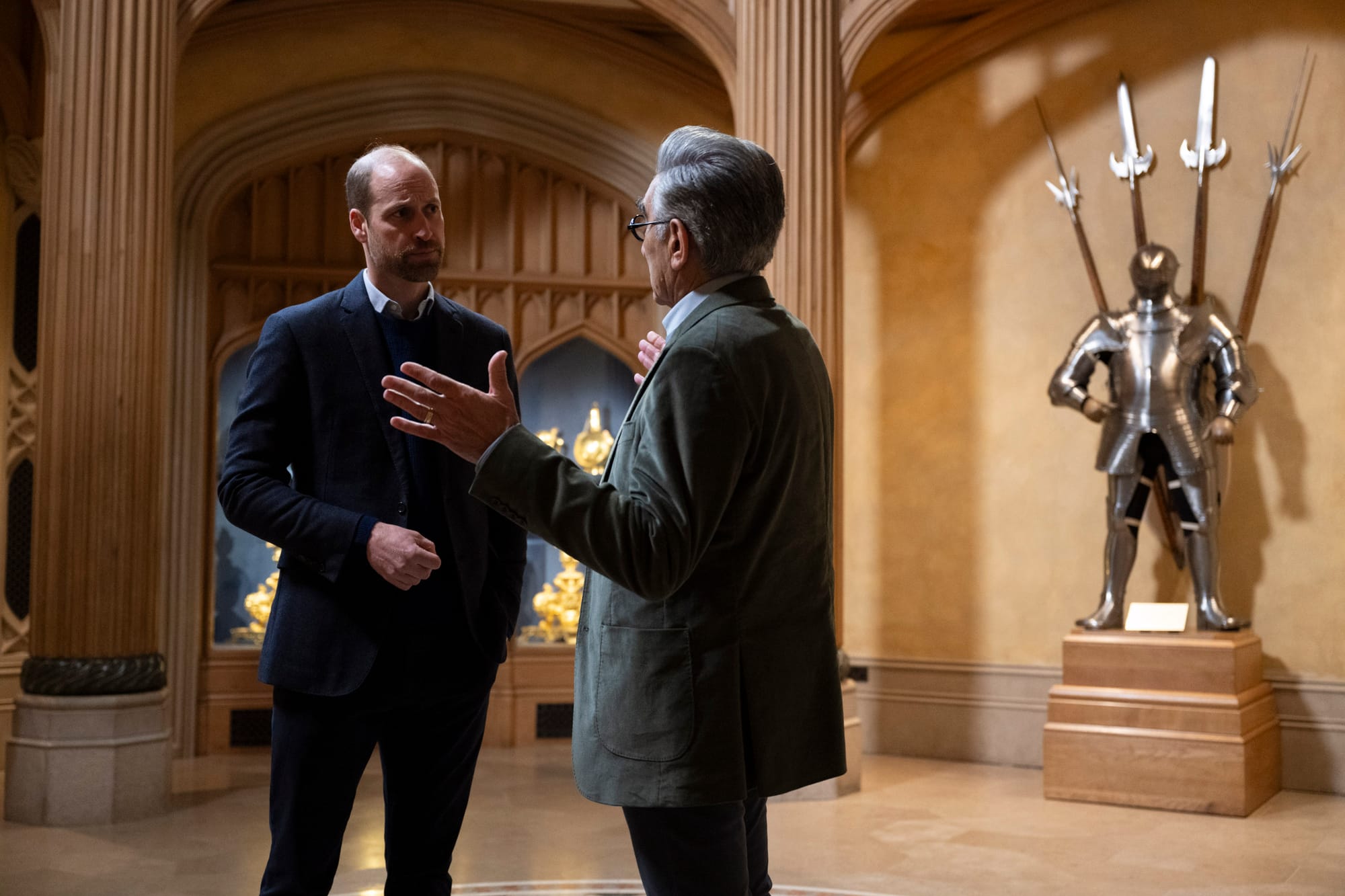
As William guides Levy through Windsor's State Apartments, the weight of history becomes almost oppressive. St. George's Hall, where William and his cousins once ran as children, risking splinters from the ancient oak floors. The King's Drawing Room, largely unchanged for centuries. Portraits of Queen Elizabeth II in full ceremonial regalia, the robes weighing heavily on her slight frame.
But it's when discussing his late grandmother that William's carefully maintained composure shows its first genuine cracks. Standing before a large portrait of the Queen, Levy asks, "Do you miss your grandmother?"
"I do, actually, yeah, I do miss my grandmother. And my grandfather," William responds. "Yeah, it's been quite a bit of change. So you do sort of, you think about them not being here anymore. And particularly being in Windsor, for me, Windsor is her. So she loved it here. She spent most of her time here."
The prince continues, sharing intimate details about their relationship: "Showing you around today is very much the case. I'm trying to make sure I'm doing it the way she'd want you to see it." It's a touching admission—that even now, William seeks to honor his grandmother's memory by presenting her beloved home as she would have wished.
He describes how their relationship evolved from formal in his youth to warmer as they both aged, particularly during his time at nearby Eton College. "I was within a few miles of my grandparents. So I would pop over from Eton sometimes on weekends, sometimes if I could get away in an evening when there was nothing else going on, I'd come round and have a bit of tea with her, 'cause she had the best teas ever, so I used to get well fed."
The anecdotes are specific, personal: his grandfather's humor ("sometimes not deliberately, sometimes by accident"), the warmth and laughter of family gatherings, the Queen riding her horses with just a headscarf instead of a helmet. These details paint a picture not of monarchs and princes, but of grandparents and grandchildren.
The Hardest Year
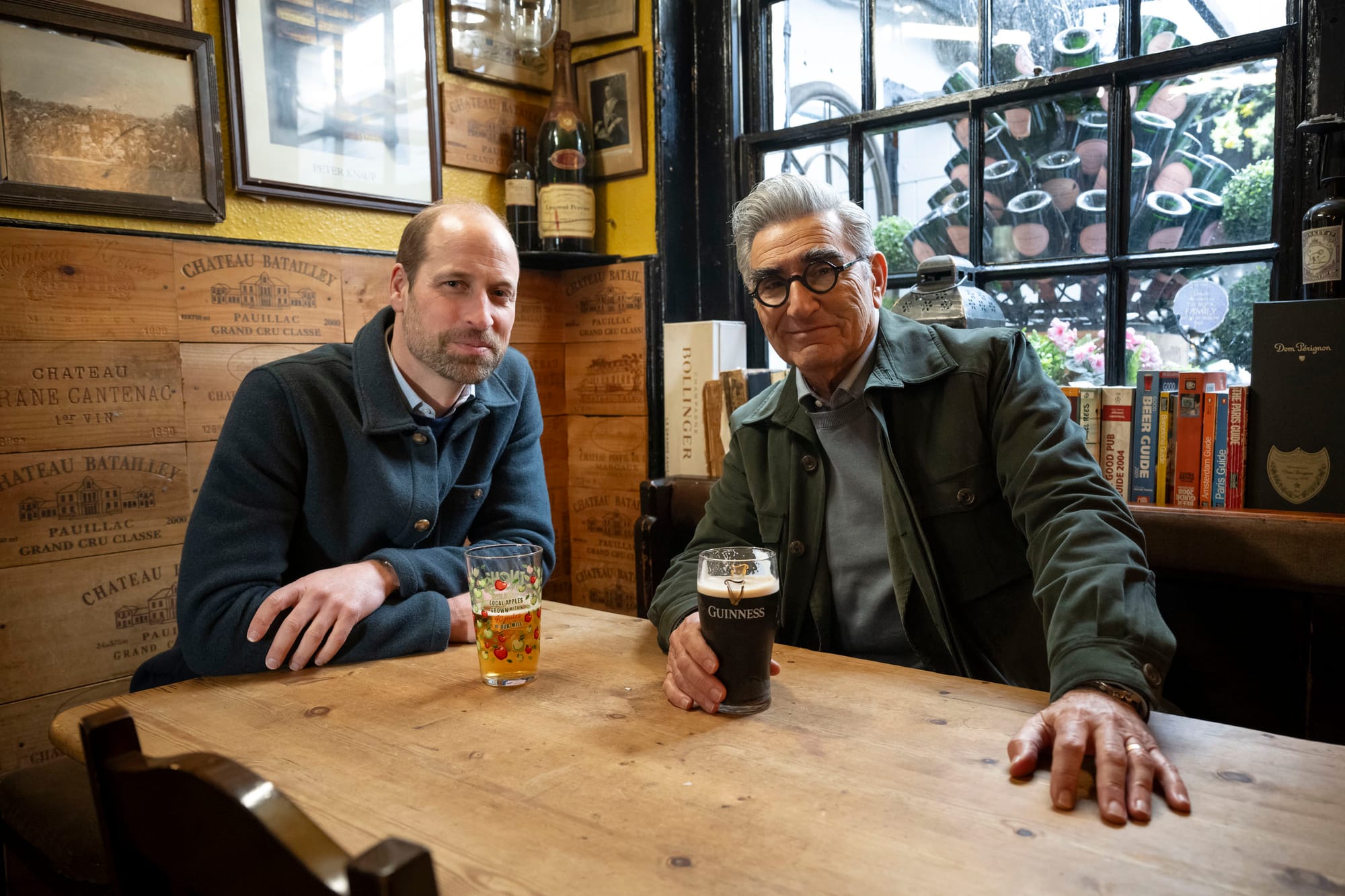
The conversation's emotional center comes later, over pints at a Windsor pub—William nursing a sweet cider, Levy with a Guinness. Here, in the informal setting of a neighborhood establishment (complete with a framed photo of the Concorde flying over the castle), William addresses what has been widely reported but never discussed by him so openly: the dual cancer diagnoses of his wife and father in 2024.
"I'd say 2024 was the hardest year I've ever had," William states plainly. "Trying to sort of balance protecting the children, Catherine. My father needs a bit of protection, but he's old enough to do that himself as well. But it's important my family feel protected and have the space to kind of process a lot all the stuff that's gone on last year."
When Levy asks about Catherine's current status, William confirms she is in remission, adding, "Things are good. Everything is progressing in the right way, which is all good news." But he's candid about the toll: "When you suddenly realize that the rug, the metaphorical rug, can be pulled from under your feet quite quick at any point, you maybe think to yourself, 'It won't happen to us, we'll be okay,' because I think everyone has a positive outlook. You've got to be positive. But when it does happen to you, then yeah, it takes you into some pretty not great places."
Catherine announced her cancer diagnosis in March 2024, completed chemotherapy by September, and announced her remission in January 2025. The timing of the filming—February 2025, just weeks after her remission announcement—adds context to William's visible relief and gratitude.
On Parenting Under Pressure
Perhaps the most revealing moments come when William discusses his children: George, 12, Charlotte, 10, and Louis, 7. His approach to fatherhood emerges as deeply informed by his own childhood trauma—specifically, his parents' divorce when he was eight and the media's invasive role in his upbringing.
"You learn from it and try not to make the same mistakes as your parents. I think we all try and do that," he tells Levy. "I just want to do what's best for my children, but I know that the drama and stress when you're small really affects you when you're older."
He describes his home life with specificity that feels both ordinary and revolutionary coming from a future king: sitting down for family dinners together every night, no phones allowed at the table ("which we're very strict about"), Louis obsessed with trampolining, Charlotte doing netball and ballet, George passionate about football and hockey. When asked what he does at home, William's answer is immediate: "Sleep. When you've got three small children, sleep is an important part of my life recently."
On helping his children navigate their mother's illness: "Everyone has their own coping mechanisms for these sorts of things and children are constantly learning and adapting. We try to make sure we give them the security and the safety that they need. And we're a very open family so we talk about things that bother us and things that trouble us. But you never quite know the knock-on effects it can have. And so it's just important to be there for each other."
The Media's Insatiable Appetite
William's most pointed comments address the British media and the lessons he learned from watching his parents—particularly his mother, Princess Diana—pursued relentlessly by paparazzi. "I enjoy my job, but sometimes there are aspects of it, such as the media, the speculation, you know, the scrutiny. They make it a little bit harder than other jobs. And it's just making sure that that doesn't overtake and intrude into areas at times when you just want a bit of space and a bit of peace."
He continues with striking directness: "Growing up, I saw that with my parents is that the media was so insatiable back then. It's hard to think of it now, but they were much more insatiable. And they wanted every bit of detail they could absorb. And they were in everything, literally everywhere... If you let that creep in, the damage it can do to your family life is something that I vowed would never happen to my family. And so I take a very strong line about where I think that line is. And those who overstep it, you know, I'll fight against."
It's a careful balance he's describing: accepting that public interest comes with the role while fiercely protecting the intimate family life that provides his children with stability. The 2024 speculation around Catherine's health—which reached fever pitch on social media before her diagnosis announcement—clearly left its mark.
Change on the Agenda
Throughout the episode, William returns repeatedly to themes of modernization and reform. When discussing whether the castle's history overwhelms him, he offers a surprisingly philosophical response:
"I wouldn't say history overwhelms me. Other things overwhelm me, but not history, no. Because I think if you're not careful, history can be a real weight and an anchor around you, and you can feel suffocated by it and restricted by it too much. And I think it's important to live for the here and now."
He continues: "If you're too intrinsically attached to the history, you can't possibly have any flexibility because you worry that the chess pieces move too much and therefore no change will happen. And I like a little bit of change. I want to question things more. I think it's very important that tradition stays and tradition has a huge part of all this. But there's also points where you look at tradition and go, is that still fit for purpose today? Is that still the right thing to do? Are we still doing and having the most impact we could be having?"
When Levy directly asks if he thinks about becoming king, William's response is revealing: "It's not something I wake up in the morning and think about. Because to me, being authentic and being myself and being genuine is what drives me. And then you can attach whatever labels and kind of roles that come on top of that. But if I'm not true to myself and I'm not true to what I stand for and believe in, then kind of it doesn't really matter who you are. It gets lost."
Later, he makes his intentions even clearer: "I think it's safe to say that change is on my agenda. Change for good. And I embrace that and I enjoy that change. I don't fear it. That's the bit that excites me is the idea of being able to bring some change. Not overly radical change, but changes that I think need to happen."
These statements, while carefully worded, represent a more explicit commitment to reform than typically heard from senior royals. As Levy noted in interviews after filming, "I was getting a sense that once he does become King, there will be a change in the monarchy as we know it."
Orla and the Illusion of Normalcy
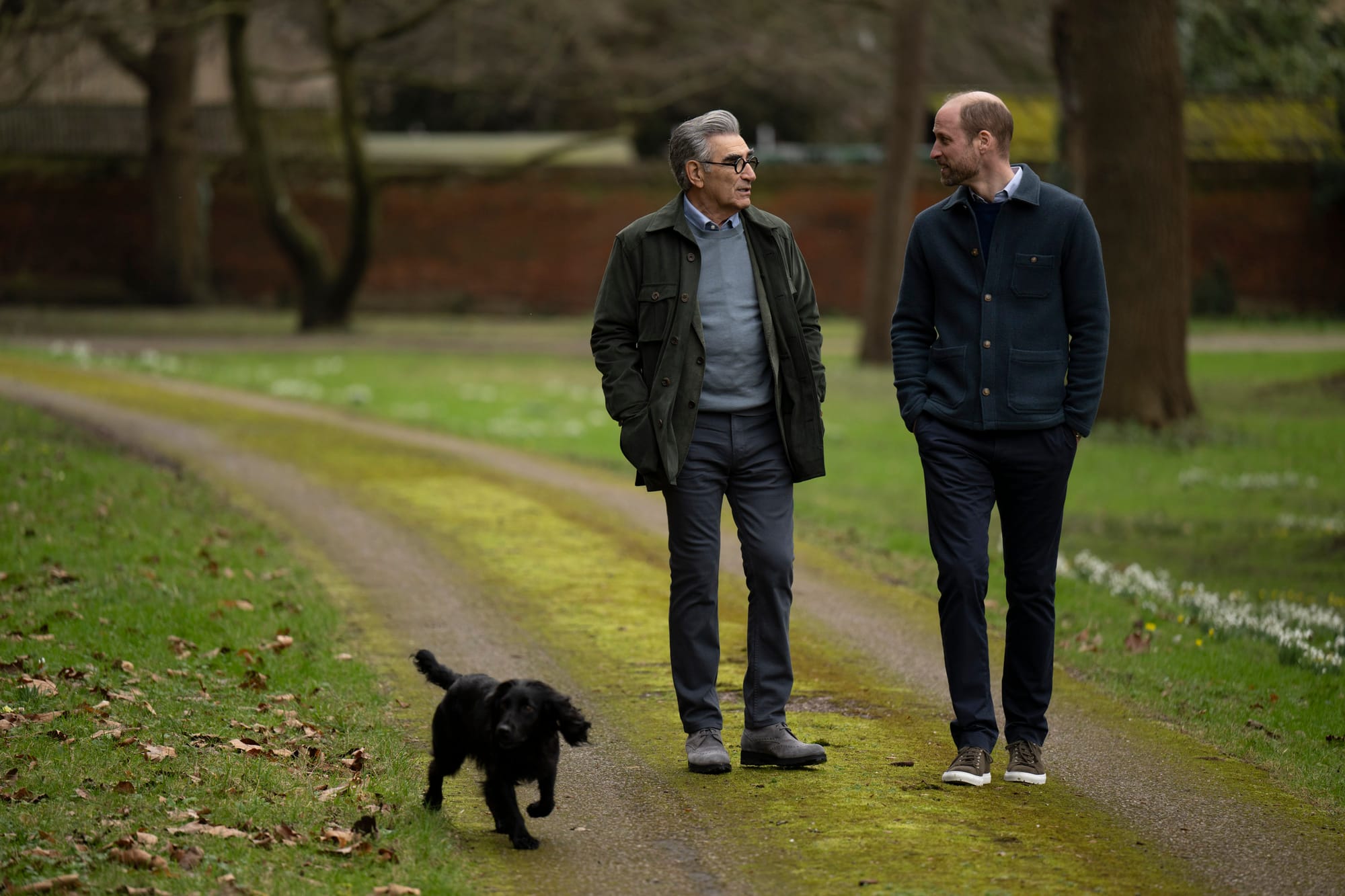
After the heavy conversations in the castle, the episode's mood lightens when William introduces Levy to Orla, the family's cocker spaniel and niece of their late dog Lupo, who died during lockdown. The prince's genuine affection for the dog is evident, as is his pleasure when Orla enthusiastically accepts the dog biscuits Levy brought from his hotel.
"She likes you now," William observes as Orla begs for more treats. "Now she knows there's biscuits involved, you'll be top of the list."
They walk through the castle grounds, passing under Heathrow flight paths, which leads to William sharing one of his favorite tourist anecdotes: visitors wondering why anyone would build a castle "so close to Heathrow Airport." The absurdity makes him laugh—"I mean, I know my history's bad, but that's another level."
These lighter moments serve an important function. They allow both William and the viewer to breathe, to remember that for all the historical weight and royal duty, this is also just a man walking his dog, making jokes about airplane noise, and trying to get home in time for dinner with his kids.
The Strategic Vulnerability of Modern Royalty
What makes this episode both compelling and complex is the question of authenticity versus strategy. Multiple commentators noted that viewers "will see Prince William in a different light" after watching. Levy himself was effusive in his praise: "I was so impressed with the Prince of Wales. It was a charming few hours that we had together... I don't know what I expected, you know, from a royal. The monarchy has always been so very formal, but with William, you didn't get that at all. He's a dad who goes to work and then comes home and you know has dinner with his kids."
But this humanization is also highly managed. Notably, Kensington Palace sources indicated that nothing had been declared off-limits for discussion, yet the conversation never veered into truly uncomfortable territory. William's openness about his family's health challenges is moving and genuine, but it's also openness on his terms, in his home, with editorial control presumably negotiated in advance.
The episode represents the current state of royal media relations: appearing accessible while maintaining boundaries, seeming spontaneous while following a carefully choreographed script, sharing vulnerability while protecting the institution. It's transparency theater, but executed so skillfully that the theater becomes secondary to the human connection.
Review: Warmth Within the Walls
As television, "Living the Royal Life in the UK" succeeds largely because of the chemistry between its two leads. Levy's humor is never invasive or presumptuous; he asks questions with genuine curiosity rather than journalistic aggression. His reactions—whether marveling at Henry VIII's relatively small armor or gently teasing William about the castle's gold-lined fences—provide the audience's entry point into a world most will never access.
William, for his part, plays a more relaxed version of himself than typically seen in official engagements. The scooter arrival sets the tone: this is a prince who can laugh at himself, who acknowledges being chronically late, who makes dad jokes about his children's splinter-free carpet. The structure of the episode—moving from formal spaces to intimate ones, from historical discussion to personal revelation—allows both men to gradually drop their guards.
The pub sequence is particularly effective on television. There's something delightfully surreal about watching a future king and a Canadian comedy actor drinking beer in a neighborhood establishment, discussing cancer, family trauma, and constitutional reform (even though it's obviously carefully stage-managed). The setting's informality gives William permission to be more candid than he might be in a palace sitting room or during a formal interview.
The episode's weaknesses are largely inherent to its premise. At 45 minutes, there's not enough time to deeply explore any single topic. The segments on Windsor's history, while visually stunning, sometimes feel like necessary context rather than compelling narrative. And the elephant in the room—the broader questions about monarchy's relevance in modern Britain, the ongoing Commonwealth debates, the institutional racism allegations—remains politely unaddressed.
But perhaps that's not what this episode is meant to do. It's not an investigative piece or a hard-hitting interview. It's a portrait, carefully painted, of one man navigating an impossible role with grace and humor. Whether you find that portrait authentic or strategic likely depends on your existing feelings about the monarchy itself.
The Calculus of Controlled Access
Levy's episode fits into a broader pattern of how William and Catherine have approached the media in recent years. As CNN noted, "For once, behind castle walls, the monarchy looked unmistakably human." But this humanity is offered selectively: through high-production Apple TV+ episodes, carefully curated Instagram posts, and pre-approved photography.
The contrast with previous royal generations is stark. Queen Elizabeth II gave remarkably few interviews over her 70-year reign, preferring to let her presence speak for itself. Prince Charles (now King Charles III) has been more talkative but often stiff and formal. Prince Harry and Meghan Markle's approach—unfiltered revelations in Oprah interviews and memoirs—has been controversial precisely because it broke the unspoken contract of royal discretion.
William appears to be charting a middle course: more open than his grandmother, more controlled than his brother, more strategically human than his father. The Levy episode exemplifies this approach—personal without being confessional, warm without being intimate, reformist in rhetoric without committing to specific changes.
The Authenticity Question
The episode's ending brings Levy to St. George's Chapel, the final resting place of Queen Elizabeth II and Prince Philip. Sitting in the same pews where the late Queen sat during her husband's funeral—an image seared into public consciousness—Levy reflects on his day.
"I was so impressed with the Prince of Wales," he says in voiceover. "It was a charming few hours that we had together. I don't know what I expected, you know, from a royal. The monarchy has always been so very formal, but with William, you didn't get that at all. He's a dad who goes to work and then comes home and, you know, and has dinner with his kids. There's a normalcy to it that just surprised me. It took me aback, actually, a little bit. He was so down to earth, very funny, very bright. Gotta be honest, he was fun to hang with."
Is this the "real" William? Perhaps the better question is whether there's a meaningful distinction between public and private selves when your entire life has been lived in view. William has never known privacy in the way most people understand it. His childhood, adolescence, grief, courtship, marriage, and parenthood have all been public spectacles. What we see in the Levy episode might be as close to authentic as someone in his position can offer—a self constructed not through deception but through the necessity of living multiple roles simultaneously.
Conclusion: The Bucket List and the Crown
As Levy prepares to leave Windsor, William jokes about their day together: "I was getting drunk in a Windsor pub with Prince William on your bucket list?" Levy laughs: "That's the bucket. That's the bucket, isn't it?"
It's a fitting encapsulation of the episode's appeal—the incongruity of a Canadian actor and a British prince finding unexpected connection over beer and dog biscuits, castle tours and cancer scares, history and hope for the future. The episode succeeds because it locates universal human experiences within an exceptionally rarefied context.
What lingers after watching is not the grandeur of Windsor Castle or the weight of a thousand years of history, but smaller moments: William getting a flat tire on his scooter, his voice catching slightly when discussing his grandmother, his evident relief when talking about Catherine's remission, his laugh at the Heathrow tourist story, his genuine affection for his dog.
These moments don't erase the larger questions about monarchy, privilege, and institutional power. They don't make the carefully managed access any less calculated. But they do achieve something that no amount of formal ceremony can: they make a future king seem recognizably human, someone dealing with the same fears, griefs, and hopes that define human existence—just within a vastly different setting.
Whether that's enough to sustain the monarchy's relevance in the 21st century remains an open question. But for 45 minutes on a drizzly English day, Eugene Levy and Prince William found common ground in their shared humanity. And perhaps that's the point—not to answer the big questions about royalty's role in modern democracy, but to remind us that underneath the crowns and protocols are simply people, doing their best to navigate the circumstances they were born into.
"I kinda hope when William becomes king, I'll still be around to tell my grandson, you see that guy wearing the crown? I had a pint with him once," Levy muses at the episode's end. It's a sweet sentiment, and one that captures both the episode's charm and its limitations. A pint with a prince is indeed a remarkable bucket list item. But it's also just a pint—a momentary connection that, however genuine, can't fully bridge the vast distance between ordinary life and royal existence.
The episode succeeds not despite this gap but because of it, offering viewers a rare glimpse across a divide that usually remains insurmountable. That we find William sympathetic, relatable, even likable during this glimpse speaks to both the power of good television and the enduring human need to see ourselves reflected in those who seem impossibly distant. Whether it also speaks to the monarchy's successful adaptation to modern media—or merely delays inevitable questions about its purpose—only time will tell.