Crown & Influence: Empress Matilda - The Woman Who Nearly Was Queen

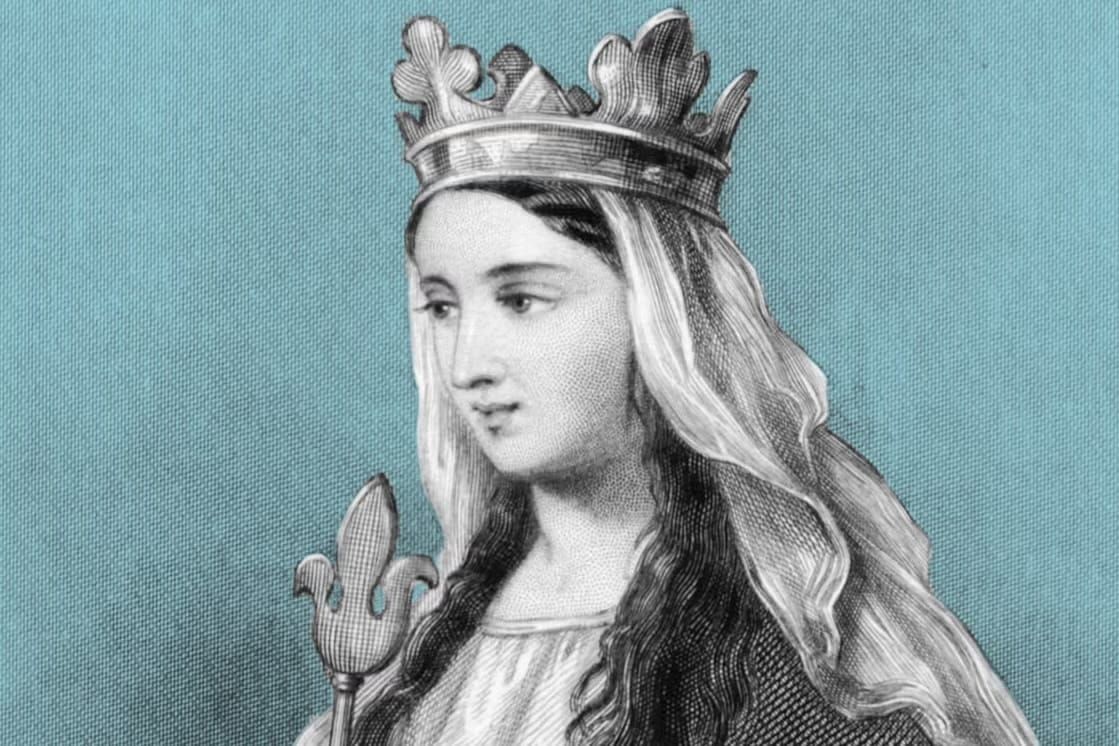
England's First Female Claimant and the Architect of the Anarchy
In the turbulent landscape of twelfth-century England, one woman dared to claim what few believed she deserved: the throne itself. Empress Matilda, daughter of King Henry I, was not merely a footnote in medieval history but a transformative figure whose nineteen-year struggle for the crown reshaped the English monarchy and paved the way for one of England's greatest dynasties. Though she never wore the crown in victory, her relentless determination and political acumen left an indelible mark on British royal history.
A Princess Born to Rule
Born in February 1102 at Sutton Courtenay in Oxfordshire, Matilda entered the world as the eldest legitimate child of Henry I of England and his wife Matilda of Scotland. From birth, she occupied a unique position in the complex web of medieval succession. Her grandfather was William the Conqueror himself, and through her mother, she descended from the ancient Anglo-Saxon royal line, uniting Norman and English bloodlines in a single person.
At the tender age of eight, Matilda embarked on a journey that would define much of her identity. She was betrothed to Henry V, the Holy Roman Emperor, and sent to Germany to be raised at the imperial court. In 1114, at just twelve years old, she married the Emperor, who was twenty-three years her senior. As Empress, she gained not only a title of immense prestige but also invaluable experience in governance and statecraft. She accompanied Henry V on his campaigns in Italy, witnessed the intricacies of imperial politics, and learned to navigate the treacherous waters of medieval power. The title 'Empress' would remain with her for life, even after Henry's death in 1125, a testament to the profound dignity and authority she had acquired.
The Succession Crisis
The death of Matilda's brother, William Adelin, in the White Ship disaster of 1120 transformed her from a dowager empress into England's only legitimate heir. The tragedy that claimed William's life and over three hundred others sent shockwaves through the Norman realm. Henry I, devastated by the loss of his son and heir, faced an unprecedented dilemma: England had never been ruled by a queen in her own right.
Undeterred by convention, Henry I summoned his barons to Westminster on Christmas Day 1126 and extracted from them an oath of fealty to Matilda as his heir. This was revolutionary. The assembled nobility, including her cousin Stephen of Blois, swore to recognize her claim to the throne after Henry's death. To strengthen her position and provide her with support in England, Henry arranged Matilda's second marriage in 1128 to Geoffrey of Anjou, a strategic alliance that united Normandy with the powerful Angevin territories. Though Matilda was eleven years Geoffrey's senior and reportedly found him disagreeable, the marriage produced three sons, including the future Henry II.
The Broken Oath
When Henry I died in December 1135, the carefully constructed succession plan collapsed with shocking speed. Stephen of Blois, Matilda's cousin and one of those who had sworn to support her claim, moved with decisive speed. While Matilda was in Anjou, pregnant with her third child, Stephen crossed the Channel, seized the royal treasury at Winchester, and had himself crowned king within three weeks. His usurpation was facilitated by several factors: he was male, he was present in England, and he had the support of his brother Henry of Blois, the powerful Bishop of Winchester, and the Church.
The barons' justifications for breaking their oaths were numerous and contradictory. Some claimed they had sworn under duress, others argued that Matilda's marriage to Geoffrey of Anjou, traditional enemy of the Normans, invalidated their oaths. Many simply preferred a king to a queen. This betrayal ignited a civil war that would rage for nineteen years and become known to history as 'The Anarchy.'
The Anarchy: England's Civil War
The conflict that engulfed England from 1135 to 1154 was more than a simple succession dispute. It represented a fundamental crisis about the nature of royal authority, the binding power of oaths, and the role of women in medieval governance. Matilda landed in England in 1139, establishing her base at Bristol Castle under the protection of her half-brother, Robert, Earl of Gloucester, the most powerful magnate in the realm and her staunchest supporter.
The war ebbed and flowed across the English countryside. Castles changed hands, territories shifted allegiance, and the kingdom fractured into competing spheres of influence. The Anglo-Saxon Chronicle, that invaluable contemporary record, described the period in harrowing terms: men said openly that Christ and his saints slept, as the land was afflicted with violence, arbitrary justice, and suffering.
The Taste of Victory
In February 1141, Matilda's fortunes reached their zenith at the Battle of Lincoln. Her forces captured Stephen himself in battle, a stunning reversal that seemed to deliver the crown into her hands at last. With her rival imprisoned at Bristol, Matilda moved to consolidate her power. She advanced to London and made preparations for her coronation at Westminster Abbey.
Yet this moment of triumph revealed the complexities of medieval power. Matilda adopted the title 'Lady of the English,' a carefully chosen designation that acknowledged both her authority and the unprecedented nature of her position. However, her political miscalculations proved costly. She demanded substantial payments from London's citizens and allegedly treated the city's leaders with haughty disdain. Whether these accounts reflect genuine arrogance or propaganda from her enemies remains debated by historians, but the consequences were immediate and devastating. The Londoners rose in revolt, forcing Matilda to flee Westminster before her coronation could take place.
The Great Reversal
The political landscape shifted again with breathtaking speed. At the Battle of Winchester in September 1141, Stephen's forces captured Robert of Gloucester, Matilda's essential military commander and half-brother. Faced with the loss of her greatest supporter, Matilda agreed to an exchange: Stephen for Robert. The two leaders who embodied the opposing claims were freed, and the civil war ground forward with renewed intensity, neither side able to achieve a decisive advantage.
The winter of 1142 brought perhaps the most dramatic episode of Matilda's career. Besieged in Oxford Castle by Stephen's forces with escape seemingly impossible, Matilda demonstrated the resourcefulness and courage that defined her character. Under cover of a December snowstorm, dressed in white camouflage, she was lowered by rope from the castle walls. With a small group of loyal knights, she walked six miles across the frozen Thames to safety at Wallingford, her white clothing rendering her nearly invisible against the snow-covered landscape. This daring escape became legendary, a symbol of her indomitable will.
Legacy and the Angevin Triumph
By 1148, exhausted by years of inconclusive warfare, Matilda withdrew to Normandy, never to return to England. Yet this was not defeat but transformation. She recognized what her pride had initially prevented her from seeing: her son, not she herself, would unite the kingdom. Young Henry of Anjou, raised with an acute understanding of his dual heritage and his mother's claim, would succeed where she could not.
From her court in Rouen, Matilda became her son's most trusted advisor and regent. She governed Normandy during his absences, negotiated with kings and popes, and orchestrated the diplomatic and military campaigns that would ultimately vindicate her struggle. When Henry invaded England in 1153, Stephen, aged and bereaved by the death of his own son Eustace, agreed to the Treaty of Wallingford. Stephen would reign for his lifetime, but Henry would succeed him as rightful king.
In 1154, Stephen died, and Henry II ascended the throne, founding the Plantagenet dynasty that would rule England for over three centuries. Matilda's blood thus claimed the crown at last, not through her own coronation but through her son's succession. She lived another thirteen years, respected as the king's mother, consulted on matters of state, and revered as the woman who had refused to surrender her birthright.
The Woman Behind the Legend
Empress Matilda died on September 10, 1167, at Notre-Dame-du-Pré near Rouen. Her epitaph, inscribed on her tomb, read simply: 'Great by birth, greater by marriage, greatest in her offspring.' Yet this modest summation barely captures the magnitude of her achievement and influence.
Matilda's significance extends far beyond her role as mother to a king. She challenged the fundamental assumptions of medieval kingship by asserting that royal blood and legitimate succession mattered more than gender. Though England would not crown a queen regnant until Mary I in 1553, Matilda's struggle established crucial precedents about hereditary right and legitimate authority. She demonstrated that a woman could command armies, govern territories, and compete for the highest throne in the land.
Her political acumen, developed during her years as Holy Roman Empress, brought continental sophistication to English governance. She understood the machinery of power, the importance of alliances, and the necessity of balancing firmness with diplomacy. If her personality was indeed as imperious as her critics claimed, it reflected not mere arrogance but the hardened determination of a woman forced to fight for rights that would have been unquestioned in a man.
Conclusion: The Uncrowned Queen
Empress Matilda never wore the crown of England, yet her impact on English history rivals that of many who did. She transformed the succession crisis following her father's death into a nineteen-year assertion of principle that ultimately reshaped the monarchy. Through her son Henry II, she founded one of the most powerful royal dynasties in European history, and through her grandson Richard the Lionheart and great-grandson John, her blood continued on the throne.
More importantly, Matilda challenged and expanded the possibilities of queenship. She proved that royal authority could transcend gender, that women could govern, command, and fight for their rights. In an age when women were expected to be pawns in dynastic games, Matilda insisted on being a player. Her story reminds us that power in the medieval world was never simply inherited but always contested, negotiated, and fought for. In the pantheon of notable figures in British royal history who shaped the monarchy without wearing its crown, Empress Matilda stands supreme: the woman who nearly was queen, and who changed the kingdom forever by her refusal to accept anything less than her birthright.